
Why Does Unicode Have Three Trams But No Pigeon?
Open your emoji keyboard and look for a pigeon. Take your time. The closest you will find is 🐦, a generic bird that nobody who has ever lived in a city would call a pigeon, and 🐦⬛, a black bird invented in 2022 by mashing 🐦 against a black square. Now look for a tram. Then a tram car. Then a mountain railway. Then a monorail. Then a suspension railway. Then an aerial tramway. Then a mountain cableway. You will find all seven, plus eight more train and station glyphs, in less time than it took to fail to find a pigeon.
This post is a tongue-in-cheek audit of who got onto your keyboard and who got stuck in committee. It turns out the answer is mostly: whoever sold phones in Japan in 1999.
Copy the rail roster
The roll call
Here is the actual count. Counting only land-rail vehicles (no buses, no boats, no helicopters, no scooters), Unicode contains light rail 🚈, mountain railway, monorail, generic train, high-speed train, bullet train, locomotive, railway car, metro, station 🚉, tram, and tram car. Adding the cable family ( aerial tramway 🚡, mountain cableway, and the much-discussed suspension railway), the rail/cable count comes to fifteen. Fifteen ways to indicate that you are on rails, on a phone where you cannot indicate that there is a pigeon outside.
For comparison, here is every dedicated, named bird emoji: 🐔 chicken, 🐓 rooster, 🐣 hatching chick, 🐤 baby chick, 🐥 front-facing baby chick, 🐦 generic bird, 🐧 penguin, 🕊️ dove of peace, 🦃 turkey, 🦅 eagle, 🦆 duck, 🦉 owl, 🦚 peacock, 🦜 parrot, 🦢 swan, 🦤 dodo (extinct since 1681), 🦩 flamingo, 🪿 goose, plus the ZWJ sequences 🐦⬛ black bird and 🐦🔥 phoenix (also literally extinct, also literally fictional). The dodo got in. The pigeon did not.
Why so many trams?
The answer is depressingly clean: because Unicode 6.0 in 2010 absorbed Japan’s mobile carrier emoji sets in their entirety. The carriers in question (NTT DoCoMo, KDDI au, and SoftBank) had each shipped pictograms on their phones since the late 1990s. Their sets included specific Japanese transit experiences: the bullet train, the Tokyo metro, the cable cars at scenic mountain destinations, even the rare Shōnan Monorail. To make text messages portable across carriers, Unicode promised to round-trip every glyph from every carrier. So all of them came in.
The pre-Unicode handover started even earlier. In 2009 the Consortium added emoji-adjacent ARIB symbols (Japanese broadcasting pictograms) to Unicode 5.2 for compatibility with Japan’s broadcasting standards body. That gave us, among other things, four mailbox states and the kanji buttons for "reserved" and "bargain".
The decision was reasonable in 2010. Today it means that an American teenager in 2026 has eight ways to draw a train and zero ways to draw a pigeon. The keyboard ossified around the commute patterns of late-1990s Tokyo.
The pigeon-shaped hole
Pigeons are, by population, one of the most successful urban animals on Earth, with rough global estimates of around 400 million rock doves. There are more pigeons in New York than there are residents. There are more pigeons in Venice than tourists. None of them have an emoji.
The closest you can get is 🐦 (added 2010, looks like a generic small songbird depending on platform), 🕊️ Dove of Peace (added 2014, white, religious, not the same vibe), or the 2022 hack 🐦⬛ Black Bird, which is a zero-width-joiner sequence: 🐦 + ZWJ + ⬛. Samsung renders it as a crow. Google renders it as a generic blackbird. Apple renders it as approximately a Halloween prop. Nobody renders it as a pigeon.
Petitions for a dedicated pigeon emoji have been circulating since at least 2018 on Change.org and iPetitions. The Unicode Emoji Subcommittee, advised most famously by Jennifer 8. Lee of Emojination (the group behind the dumpling, hijab, and onion emojis), has consistently declined the pigeon. The published proposal guidelines formally prefer that proposals avoid "easily confused with existing characters", which the committee has interpreted to mean a generic 🐦 already covers it.
It does not, but the keyboard says it does, and that is the keyboard.
The over/under census
Below is a tab-flipping audit of the imbalance. The over-represented side ranks emoji categories with more glyphs than their real-world prevalence would seem to justify. The missing side lists categories with zero emoji despite some pretty loud claims to deserve one. Click any row to expand the membership and the explanation.
Unicode's over/under census
Categories where Unicode kept saying yes. Bar width is emoji count, capped at the leader.
Two things stand out. First, the over-represented categories are nearly all from the same era and same source. They are 1990s Japanese signage. Second, the missing list is disproportionately the actual ambient world: pigeons, squirrels, common bugs, dog breeds, toddlers. Things you would point at on a walk through any city. The keyboard knows the Tokyo subway better than it knows your block.
Class of 2020 to 2024
Unicode has been gently catching up. Recent animal additions have been relatively boring-but-needed: 🦫 beaver in Unicode 13 (2020), 🦤 dodo in Unicode 13 too (because a vocal extinct-species lobby exists), 🫎 moose, 🫏 donkey, and 🪿 goose in Unicode 15 (2022), and the ZWJ-built 🐦⬛ Black Bird the same year. Unicode 18 (the 2026/2027 draft) is teasing a Lighthouse, a Pickle, a Meteor, and a Cracking Face. Still no pigeon. Still no squirrel.
Here is the count gap, ranked. The highlighted bars are the post’s three protagonists. Two of them are zero.
Demand vs supply
It is not as if nobody is searching for these. Google Trends data on the literal queries "pigeon emoji", "squirrel emoji", "bird emoji", and "tram emoji" from 2021 through 2026 shows persistent low-but-real demand for pigeon and squirrel and almost zero demand for tram. Yet on a search-volume basis, "tram emoji" gets seven existing glyphs to choose from and the other two get none.
The 2025 Q2 spike for tram is a brief news-cycle anomaly; the rest of the time tram is a flat line near zero.
Source: Google Trends, quarterly max
Platform glyphs disagree too
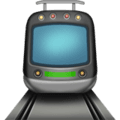
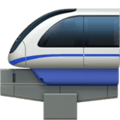
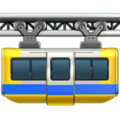
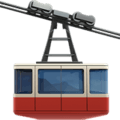
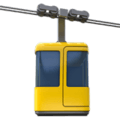
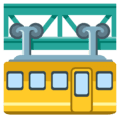
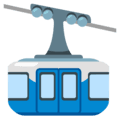
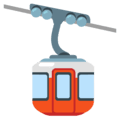
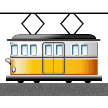
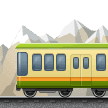
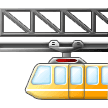
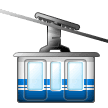
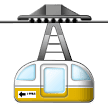
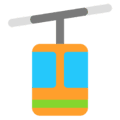
The over-supply has a second-order problem: when seven niche transit modes share a keyboard, most platforms quietly stop trying to draw them properly. Apple gives you a roughly cross-section view; Google ships an angled isometric. Samsung’s tram looks like a 1990s toy. Look at how 🚊, 🚋, 🚞, 🚝, 🚟, 🚠, and 🚡 render across vendors and you can practically watch each design team give up.














Creative reuse
The natural human response to having seven trams and no pigeon is to use the trams for anything but trains. Below are some real-world second-job assignments these emojis end up with. None of these are what Unicode meant. All of them are what people actually do with 🚊, 🚞, 🚟, 🚠, and friends.
The pigeon stand-ins, by the way, are 🐦 plus context (🐦🥖 = pigeon stealing bread, 🐦🏛️ = Trafalgar Square pigeon, 🐦🚏 = bus-stop pigeon). It works in the way that mime works. Everyone gets it; nobody is happy about it.
What not to send
The over-represented and the missing both create texting hazards. Here is what to keep your fingers off.
Unless you are commuting in Wuppertal or Chiba, this is a Schwebebahn-style overhead-suspended rail vehicle, not your subway. Use 🚇 for metro, 🚆 for regular train.
Technically correct. But 80% of recipients will read it as 'some kind of futuristic mystery train' and not know whether to ask. 🚆 reads cleaner.
It's officially a chipmunk. Stripes, smaller body, bushy-but-not-fluffy tail. If you want a squirrel, you're stuck with this or with 🐀, neither of which is right.
It's a black bird ZWJ. Samsung shows a crow, Apple a generic dark songbird, Google something between. Your iPhone friend and your Galaxy friend will see two different birds.
What this tells us about Unicode
The keyboard you type on is a museum of which keyboards mattered when. Japan’s mobile carriers got there first and left a transit-heavy footprint. Mid-2010s emoji activism (driven heavily by Emojination and the dumpling-emoji generation) pushed for food, headscarf, and disability representation. Late-2010s saw skin-tone and gender expansion. The 2020s have been a slow, careful drift toward useful animals (beaver, goose, moose) and small everyday objects (ginger, mirror, ladder).
What is not happening, structurally, is a backfill of the most obvious omissions. The pigeon, the squirrel, the toddler, the labrador, the tick, all sit in proposal purgatory because the published bar requires distinctive image, broad expected use, and no overlap with existing characters. The committee has decided repeatedly that 🐦 covers pigeon. It does not, but it does in the document.
Meanwhile, the suspension railway is fine. It is, in fact, doing great. It has been on every keyboard since 2010 and will probably outlast the species we share cities with.
- Emoji - Wikipedia (wikipedia.org)
- Aerial Tramway emoji on Emojipedia (emojipedia.org)
- Suspension Railway emoji on Emojipedia (emojipedia.org)
- Mountain Railway emoji on Emojipedia (emojipedia.org)
- Monorail emoji on Emojipedia (emojipedia.org)
- Black Bird emoji on Emojipedia (emojipedia.org)
- Chipmunk emoji on Emojipedia (emojipedia.org)
- Goose emoji proposal (L2/21-219, PDF) (unicode.org)
- Donkey emoji proposal (L2/21-196, PDF) (unicode.org)
- Squirrel emoji proposal (L2/17-442, PDF) (unicode.org)
- Unicode 16.0 Emoji List (emojipedia.org)
- Draft Emoji List for 2026/2027 (Emojipedia) (emojipedia.org)
- Guidelines for Submitting Unicode Emoji Proposals (unicode.org)
- Pigeon emoji petition on Change.org (change.org)
- Pigeon emoji petition on iPetitions (ipetitions.com)
- One Woman's Bizarre, Delightful Quest To Change Emojis Forever (BuzzFeed) (buzzfeednews.com)
- Of Dumplings, Bok Choy, and the Politics of Emoji (Harvard Magazine) (harvardmagazine.com)
- Wuppertal Suspension Railway (Wikipedia) (wikipedia.org)
- USPS Office of Inspector General: Analysis of Historical Mail Volume Trends (uspsoig.gov)
- Google Trends data backing this post (trends.google.com)
