
The 🧊 Industrial Complex: How a Drink-Garnish Emoji Became Every January Bio
It is January 8, 2026. Open Hinge. Open X. Open the group chat where your most insufferable college friend posts his weekend. There is one emoji you will see more than any other, and it is not 🎯 and it is not 💪. It is 🧊. A small blue cube. Officially named, by the Unicode Consortium in Unicode 12.0, just Ice. The thing that goes in a drink. The thing your grandmother put in lemonade.
That is not what 🧊 means anymore. In 2026, 🧊 in a bio means cold plunge. It means you wake up at 5:42 and lower yourself into 38-degree water for 90 seconds before checking your phone. It means you have listened to the Huberman Lab Episode 66 all the way through, possibly twice. It means your morning routine is eleven things long. It means you peaked, mentally and metabolically, in the first quarter. This post is a tongue-in-cheek autopsy of how that happened to a 144-pixel drink garnish.
Copy biohacker emojis
The 🧊 in every January bio
The numbers are not subtle. The hashtag #coldplunge on TikTok has more than a billion views. The variant #coldplungewomen has 144 million posts on its own. The global cold plunge tub market was worth $330 million in 2024 and is projected to roughly double by 2033. Over 30% of fitness centers worldwide now offer one. None of that existed at scale before 2022.
On the dating-app side, 🧊 in a Hinge bio has become so common it sits next to 6'0 and ENFJ as a personality marker. It signals: I am up early, I am disciplined, I have surplus cash for wellness gear, I have podcast opinions. It is the polar opposite of 🛋️ and 🍷 in tone. The cube is the bro sigil of the post-pandemic optimization era. There is a parody bio generator further down so you can recognize the genre faster than you can swipe past it.
From drink garnish to sigil
The surprising thing about 🧊 is its age. It is a 2019 emoji. It shipped in March of that year as part of Unicode 12.0, the same batch that gave us 🧉 mate gourd, 🦩 flamingo, and 🦥 sloth. The original U+1F9CA ICE proposal was about drinks. Cocktails needed an "on the rocks" specifier. Iced coffee needed a glyph that was not a snowflake. Bartender content was already exploding on what was then still called Vine-after-Vine, and Unicode finally gave the world a cube.
For about three years, 🧊 was a drink emoji. It paired with 🥃 for whiskey, with 🍹 for tropical, with 🥤 for fast food. The hip-hop world picked up the secondary "iced out" meaning (jewelry covered in diamonds, slang dating to late-1990s rap). The NBA "ice in my veins" pose, debuted by D'Angelo Russell in 2016, gave it a third use. None of those readings were biohacker. None of them required you to own a $4,990 tub.
Then 2022 happened. 🧊 quietly, almost without permission, picked up a fourth meaning that is now eating the other three.
Wim Hof, then Huberman, then everyone
The cold-plunge revival has two main protagonists. The first is Wim Hof, a Dutch extreme athlete who has held multiple Guinness records for cold exposure, including swimming under ice and prolonged full-body ice contact. He spent the 2010s slowly leaking into mainstream wellness through documentaries on the BBC, National Geographic, and the Discovery Channel. By 2020 he was cycling through every major podcast: Joe Rogan, Tim Ferriss, Jay Shetty, Mindvalley, Happy Place. His New York Times bestseller What Doesn't Kill Us turned the "Iceman" nickname into a brand.
Wim Hof made cold exposure famous. He did not make it cool. The cool came from Andrew Huberman, a Stanford neurobiologist with a podcast that, in our trends data, peaked at the absolute ceiling of the Google Trends index in 2024 Q1 (a 100, the highest possible). On April 4, 2022, Huberman released a two-hour-twelve-minute episode titled Using Deliberate Cold Exposure for Health and Performance. It walked through protocols, durations, optimal temperatures, and the dopamine and norepinephrine pharmacology of cold immersion. That episode is when cold plunging stopped being a Wim Hof thing and started being a tab in everyone's morning Notion.
Wim Hof and Huberman approach the practice slightly differently. Hof emphasizes breathwork plus immersion (the "Wim Hof Method" is technically a three-pillar combo: cold, breath, mindset). Huberman emphasizes thermogenesis, brown adipose tissue activation, and post-immersion dopamine elevation, with breathing as one input among several. The two protocols overlap roughly 70%. The internet flattened them into one thing called "cold plunge" and used 🧊 as the universal emoji for it.
The $200M garage business
While Wim Hof was on the podcast circuit and Huberman was uploading episodes, a man named Michael Garrett was sitting in a garage in California with a damaged $100 acrylic bathtub. His float-tank business had just been closed by COVID. He attached an aquarium pump, a water chiller, and a filter to the broken tub. He called the result a Plunge.
Plunge, the company Garrett co-founded with Ryan Duey, went on Shark Tank in late 2022 and walked out with a $2.4 million investment from Robert Herjavec for 12% of the company, the biggest deal of the season. Within four years, the company had surpassed $200 million in cumulative revenue and shipped over 30,000 tubs. The signature unit retails for $4,990, which is deliberately less than half of luxury competitors that go to $10,000.
Other tubs followed. Joe Rogan, the most influential cold-plunge evangelist on earth, uses a Morozko PRO at home and a BlueCube at the studio, set to 33 degrees Fahrenheit, every morning, two to three minutes. Brrrn, Cold Tub Co, Morozko, BlueCube, Sun Home, Ice Barrel, every brand has a slightly different shape and chiller spec. The category did not exist as a consumer product before 2020. By 2026 it has a full industry analyst dashboard and a federally registered trade association working group.
The science (briefly, honestly)
The cold-plunge claim list has gotten long. Practitioners attribute reduced inflammation, better mood, improved sleep, increased focus, faster muscle recovery, more brown fat, higher dopamine, lower cortisol, immune resilience, longevity, fat loss, depression relief, and (depending on which Reddit thread you are reading) better skin and a better social life.
The honest version is narrower. The most reliable finding is the dopamine response: cold water at 14 degrees Celsius (57 Fahrenheit) increases dopamine by roughly 250% for one to three hours afterward, which is genuinely a lot, and is the source of the "feels great after" effect practitioners describe. Brown adipose tissue activation is real but modest, on the order of 100 to 200 additional calories burned per session, with the body adapting downward as you do it more often.
The risks are also real. The American Heart Association notes that sudden cold immersion triggers a cold-shock response: a sharp jump in heart rate, breathing rate, and blood pressure that can induce arrhythmias in vulnerable people. Harvard Health flags atrial fibrillation, peripheral artery disease, and Raynaud's as contraindications. A 2024 review in the Journal of Thermal Biology examined 24 studies and concluded that most of the dramatic claims are weakly supported.
The plain version: cold plunging is probably fine if you are healthy, probably feels great, probably will not transform your life, definitely will not melt your visceral fat in a week, and will absolutely produce 🧊 in your bio for the foreseeable future.
January, but not how you think
The data tells a slightly different story than the bios do. Quarterly Google Trends interest since 2018 for "cold plunge", "ice bath", "wim hof", and "huberman":
Source: Google Trends, quarterly max
The Huberman line is the steepest object on the chart. Flat at 3-9 from 2018 to 2021, then a near-vertical climb to 100 in Q1 2024, which is the absolute ceiling of the Google Trends index. The spike is the cold-exposure episode plus the press cycle around it plus the protocol-pilled cohort discovering that NSDR plus 🧊 plus AG1 plus sun in the eyes makes a stack, in their words. The Wim Hof line peaked earlier, in Q2 2022, and has been slowly declining since. The Iceman lit the fire and got crowded out of his own genre. And the term "cold plunge" itself was at zero before 2022, then climbed to a 28-32 plateau by 2025. That is not seasonal noise. That is a vocabulary change.
The other quiet finding is the seasonality. A market-trends breakdown of "cold plunge tubs" flags two annual peaks: late June and late August (when buying a tub feels like cooling relief), and a smaller December bump (the New Year wellness rush). January, the month of the loudest 🧊 bios, is not even the bigger spike. The bios are seasonal even when the buying is not.
The gendered protocol problem
Cold-plunge content is heavily, almost comically, male. Most of the loudest evangelists (Hof, Huberman, Rogan, Naval, Bryan Johnson, Gary Brecka) are men. Most of the bio adoption of 🧊 is male. And almost all of the original protocol research, including Huberman's cited literature, was conducted on men.
Endocrinologist Dr. Stacy Sims has spent the last few years arguing that the standard 38-39 Fahrenheit, three-minute protocol is calibrated for male physiology and may be counterproductive for women. Women cool faster, vasoconstrict harder, and show greater core temperature drops during the same immersion. Women also have proportionally more brown adipose tissue, so the thermogenic upside is real, but the cortisol and thyroid response can blunt the very benefits being chased. Sims's rough recommendation for women is warmer water (around 15 degrees Celsius), shorter durations, and timed around the menstrual cycle.
The cultural read of this is bleak and tongue-in-cheek both. Men post 🧊. Women just take a cold shower and do not tell anyone. The bio sigil is doing identity work, not protocol work. The asymmetry is so consistent that The Optimist Daily ran a piece in September 2025 with a headline that essentially asked whether women should rethink cold plunges entirely. The piece is patient. The comments are not.
What not to send (a 🧊 field guide)
Some 🧊 patterns are perfectly normal. Some are tells. Here is the recognition kit.
Reads as cold plunge. If you meant whiskey, add 🥃. If you meant cool, add 😎. The bare cube is now protocol-coded.
Huberman fanboy. The 🧠 is doing 'I optimize my dopamine baseline' work, not 'I am thoughtful' work.
Generic gym-and-recovery bro. The flex is not aspirational, it is informational.
Quantified-self adjacent. Whoop, Oura, Eight Sleep all on the bedside table. Wallet larger than fridge.
Sun-in-the-eyes guy. Uses 'circadian' as a personality. Will not text back after 9pm.
If a profile uses six or more of these, the person has a Notion morning routine. Plan your responses accordingly.
The 🧊 cinematic universe
🧊 does not work alone. It anchors a small sub-keyboard of biohacker-adjacent emojis, each pulling slightly different optimization weight. Reading them in order is the fastest way to decode a profile.
🥶 the freezing face is the reaction half of 🧊. It is what your face is doing while your body is in the cube. ❄️ the snowflake is the older, weather-coded variant: less "I plunge" and more "it is cold outside," with a separate political subtext we will not relitigate here. 🛁 the bathtub is the literal vessel, often used to specify "tub" as opposed to natural water. 🧠 the brain is the cognition payoff, the reason for the suffering. 🌅 the sunrise is circadian alignment, the practice that comes right before or after the plunge. ☕ the coffee is the warming reward (Huberman recommends delaying caffeine 90 to 120 minutes after waking, which the bios mention often). 💪 is the muscular recovery framing. 📈 is the optimization aesthetic. 🥩 is the carnivore subset. 🧘 is the breathwork bridge.
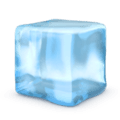









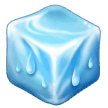









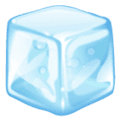









Across platforms, 🧊 is one of the most stable emojis in existence. The Apple, Google, and Samsung renderings are nearly identical: a translucent blue cube on a slight angle. There is essentially no rendering disagreement, which is rare for an emoji this culturally contested. The cube does not differ. The meaning does.
Build your January bio
Pick an archetype below. Shuffle until something feels close enough to wrong. Copy it. The point is recognition. After you build five or six of these you start spotting them in the wild and instantly know which subgenre of cold plunger you are reading.
The five archetypes are not exhaustive but they cover roughly 80% of the genre. Founder bro, Huberman fanboy, softboi-with-discipline, finance, and wellness coach. The remaining 20% is biohacker subgenres that are too small to caricature gracefully (the carnivore plunger, the AG1 plunger, the sober-October plunger, the cold-plunger-and-also-vegan, the cold-plunger-and-also-Catholic). The cube reads them all the same.
The rejected biohacker emojis
🧊 won the bio-sigil slot, but other emojis tried out for it. They all lost, in instructive ways.
❄️ would have been the obvious choice. It is older, more visually distinctive, and already carried "cold" meaning. It lost because the snowflake is too overloaded: weather, Christmas, "snowflake generation," Disney's Elsa, winter sports, and a delicate-aesthetic Pinterest moment. There was no room for cold plunge. 🥶 the freezing face was too reactive, with a closed-eyes posture that reads as suffering rather than chosen discipline. 🛁 reads as bath, which the cold-plunge community spent two years deliberately distinguishing from itself ("it is a plunge, not a bath"). 💧 droplet was too generic. 🧣 scarf was too British. 🐧 penguin was charming and wrong, and 🐻❄️ polar bear was approved in Unicode 13.0 in 2020 but reads as cute, which is the precise vibe the genre is fleeing.
🧊 won by being neutral. It is small, square, drink-coded, with no prior aesthetic baggage and just enough cold-imagery for a wellness reuse. The biohacker community annexed it the way the New Year resolution community annexed 🎯: by needing one and finding the closest available cube. The cube's feelings on the matter are not recorded.
What 🧊 used to mean
For the record, before 2022, 🧊 was a perfectly normal drink emoji. It meant whiskey on the rocks. It meant iced coffee. It meant your hockey team had a game. It meant a winter warning. It meant, in the hip-hop register that dates back to the late-1990s bling era, a chain covered in diamonds. It meant ice in my veins as in cold-blooded under pressure. It meant a thousand small things that were not the same thing. And then one neurobiologist released a podcast episode and one Dutch extreme athlete made the rounds and one $100 broken bathtub turned into a $200 million company, and the cube got a new job.
The funny part is that the new meaning is not crowding out the old ones. It is just sitting on top of them. Open your phone and look at a Hinge profile and 🧊 means cold plunge. Open your phone and look at the menu at a craft cocktail bar and 🧊 means clear cube, hand carved, $4 surcharge. The same emoji, two miles apart in the same city, doing two different jobs. This is normal. This is what emojis do. The room agreed in 2022 that 🧊 should also mean "I plunge" and never reconvened.
It is January 8. The Hinge profile you are about to swipe past has 🧊 in the bio. You now know roughly what kind of person you are looking at. Use this information responsibly. Or irresponsibly. The cube does not care, and it has been to colder places than you.
- Ice Emoji on Emojipedia (emojipedia.org)
- U+1F9CA Ice on Codepoints (codepoints.net)
- Wim Hof Method · Wikipedia (wikipedia.org)
- Huberman Lab Episode 66: Using Deliberate Cold Exposure for Health and Performance (hubermanlab.com)
- The Science & Use of Cold Exposure (Huberman Lab newsletter) (hubermanlab.com)
- How Plunge went from a $100 garage tub to a $100M business · Entrepreneur (entrepreneur.com)
- How Plunge went from garage prototype to $80M+ DTC brand · Hampton (joinhampton.com)
- Plunge biggest Shark Tank investment of 2022 · CNBC (cnbc.com)
- Cold plunges: healthy or harmful for your heart? · Harvard Health (health.harvard.edu)
- You're not a polar bear: cold-water plunge risks · American Heart Association (heart.org)
- Cold plunge benefits and risks · Houston Methodist (houstonmethodist.org)
- Cold plunging for women · Dr. Stacy Sims (drstacysims.com)
- Cold-water immersion and women · Søberg Institute (soeberginstitute.com)
- Cold Plunge Tub Market · Grand View Research (grandviewresearch.com)
- What brand of cold plunge does Joe Rogan use · Sun Home Saunas (sunhomesaunas.com)
- Andrew Huberman · Wikipedia (wikipedia.org)
- Unicode 12.0 release · Wikipedia (wikipedia.org)
- Hinge · Wikipedia (wikipedia.org)
- Google Trends data backing this post (trends.google.com)
