
The Notes App Apology Decoder: Reading Celebrity Contrition
The most widely read piece of writing in celebrity culture is not a memoir or a press release. It is a screenshot of a 📝 Notes App draft, center-justified, usually posted before noon, and almost always closed with a 🤍 or a 🙏. In the decade since Taylor Swift posted the first famous one, the Notes App apology has developed a grammar as rigid as a sonnet. Once you see it, you cannot unsee it.
This is a field guide to that grammar. How the emojis work, which stock phrases are tells, why centered text reads as sincere, and what a real apology looks like when you strip the format away. Know Your Meme dates the earliest celebrity Notes App statement to 2015, when Ariana Grande used it to apologize for the infamous donut-licking video. Ten years later the format is so codified that when Sarah Huckabee Sanders used it in 2019, NBC News could publish a whole explainer on why politicians had joined the celebrities.
Apology lexicon, tap to copy
What is a Notes App apology?
A Notes App apology is a public statement, usually from a celebrity or influencer, posted as a screenshot of an iOS Notes draft rather than as a press release, video, or formatted social post. The format is recognizable by its plain text, center-justified or left-aligned paragraphs, a Notes-App title bar at the top of the screenshot, and a small closing emoji (most often 🤍, 🙏, or 💔). Posted to Instagram Stories, X, or TikTok, it implies the statement was written personally and not polished by a publicist, whether or not that is true.
Why the Notes App won
The Notes App is the only text editor Apple ships on every iPhone and refuses to let users delete. That ubiquity is the first reason it won, but not the main one. The main reason is visual. A Notes App screenshot has no formatting. No bold, no italics, no brand logo, no email signature, no press-release letterhead. The absence is the point. It reads as the raw output of a human sitting on the edge of a hotel bed, thumbs hovering, trying to find the words.
The format “implies that the statement is something you yourself have written,” Jezebel wrote in a 2016 history of the trend, “not something your publicist or someone else wrote.” That implication is the entire asset. Whether it is true almost never matters. The The Face traces the format back through Beyoncé, Kanye, Justin Bieber, and a dozen others before declaring that by 2018 the screenshot had become “the only acceptable medium for a celebrity with something to explain.”
A press release says the crisis team is running the clock. A tweet-thread apology looks improvised and can be edited mid-controversy. A video apology, as Travis Scott found out after Astroworld, exposes every micro-expression and every lighting choice to the scrutiny of a million stitching TikTok accounts. The Notes App beats all of them because it hides the production entirely. There is nothing to analyze except the words, the punctuation, and the emoji at the bottom. Which, as it turns out, is plenty.
A ten-year timeline
The format predates the meme. Amy Schumer and Ariana Grande both posted Notes App screenshots in June and July 2015, but it was Taylor Swift’s July 2016 statement about Kanye West and Kim Kardashian that turned the screenshot into a template. The famous line (“I would very much like to be excluded from this narrative”) got all the attention, but the real story was the form. Swift had reframed a celebrity feud as a personal diary entry, and the internet decided this was now how apologies and counter-apologies happened.
The volume grew every year from there. Vogue called 2019 “the Year of the Celebrity Notes App Apology,” and a 2018 power ranking on babe.net was already long enough to cover Logan Paul, Lena Dunham, PewDiePie, Kevin Hart, and a dozen others. By 2021 the backlash was fully in motion. Paper Mag called the format “so last year” and McSweeney’s published a eulogy for it. Both pronouncements were premature.
The format kept returning because the incidents kept coming. Ned Fulmer’s September 2022 Notes App statement (“I lost focus and had a consensual workplace relationship”) got him fired from the Try Guys and turned one sentence into a meme that is still being dunked on in 2026. Lizzo’s August 2023 response to the lawsuit from her former backup dancers was faulted less for its content than for the medium itself: critics argued that a serious legal allegation deserved more than a screenshot. Six months later, Colleen Ballinger’s ukulele apology video was so spectacularly bad that it single-handedly made the boring Notes App format look dignified again.
The emoji grammar
The emojis at the bottom of a Notes App apology do more work than the paragraphs above them. They signal sincerity register, audience, and legal posture all at once, and the choice between 🤍 and 💔 is usually deliberate in a way the text is not.
The 🤍 white heart is the workhorse. It is “calm love, gentle support, and genuine sincerity without the intensity of other heart emojis,” the one that reads as “I mean this quietly.” That is exactly the register a crisis statement wants. It is not begging (that would be 🙏), not dramatic (that would be 💔), not romantic (that would be ❤️). Gen Z readers clock 🤍 instantly as the sincerity-signal default, which is also the reason it has become a tell: an apology that ends in 🤍 is an apology that has been edited at least once.
The 🙏 folded hands is the contrition emoji, and it is higher-risk. The gesture is direct about asking for forgiveness, which reads as more humble than 🤍 to older audiences and more performative to younger ones. The 💔 broken heart is used almost exclusively when the apologizer is performing their own sadness, which is a famously bad move in an apology. The ❤️ red heart shows up when the statement is aimed at a specific loved one (a spouse, a child, a bandmate) rather than the public, which sometimes makes it read more personal and sometimes makes it read as a legal shield dressed as love. And the ✨ sparkles emoji, increasingly common in 2024 and 2025 influencer apologies, functions as a wellness-aesthetic softener that reads as entirely inappropriate.
Ranked by sincerity register
That last rung, the no-emoji apology, is worth spelling out. A Notes App screenshot with no closing emoji and no warm sign-off, just a name or a title and a period, is the format’s version of “pursuant to” language. It signals that lawyers read the draft and pulled every decorative element out. The Lizzo August 2023 response is a good example: no emoji, no sign-off, lots of passive construction. Readers noticed immediately.


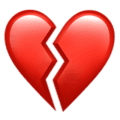


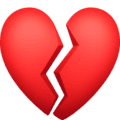






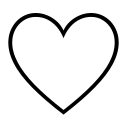

Platform rendering matters because most apology screenshots are taken on iPhones but then re-shared on Twitter, Instagram, and TikTok, where recipients see the version their own device renders. Emojipedia notes that the 🤍 was only added in Unicode 12.0 (2019), which means every apology before that was working with a smaller palette. The recent expansion of the pastel-heart family (🩷 🩵 🩶 in 2022) has not caught on in apologies, probably because pastel hearts read as too aesthetic for a serious statement.
The stock phrases
The emojis are only half the tell. The phrases above them are more diagnostic, and SorryWatch (founded by Marjorie Ingall and Susan McCarthy) has been cataloging them since 2012. Their Bad Apology Bingo cards list the usual suspects: “I’m sorry if,” “this is not who I am,” “it was never my intention,” “I do not have a racist bone in my body.” Each phrase does a specific job, and the job is almost always to shift focus from what happened to how the apologizer feels.
Since 2020 the stock phrases have shifted toward wellness-and-therapy language. The Conversation argues that modern celebrity apologies “tick boxes” around accountability without ever specifying the harm. “I am taking accountability,” “I am doing the work,” “I am listening and learning,” “I come from a place of love”: each of these sounds like an action verb and is actually a noun phrase with no object. HuffPost’s 2024 analysis put it plainly: “There’s an art to the public apology, and celebrities often mess it up.”
The bad example above is longer but says almost nothing. The good example names a person, a date, a claim, and three specific remedial actions. A UCLA sociolinguistics analysis of apology videos found that the apologies audiences rated as most sincere always share three features: explicit naming of the harm, acknowledgment of impact rather than intent, and a concrete commitment to a changed behavior. The Notes App format is compatible with all three. Most Notes App apologies just do not use them.
Search interest since 2016
Google Trends tells a strange story. The phrase “notes app apology” itself barely registers as a search, hovering around 1 to 2 on Google’s 0-to-100 scale for a decade. The phrases inside the apologies, by contrast, climb steadily. “Doing the work” went from an index of 22 in early 2016 to its all-time peak of 100 in the first quarter of 2026, and “taking accountability” quintupled over the same period.
Source: Google Trends
The chart explains why the format has not died. People are not searching for the Notes App apology as a concept, because they do not need to. They search for the specific phrases inside it. A “doing the work” index of 100 means the vocabulary has fully escaped the celebrity context and entered general use. By 2026 an apology that does not include a 2020s wellness phrase will feel dated the way a 2016 apology signing off with “xoxo” feels dated today.
The typography tells
Before you even read the words, the Notes App screenshot signals something with its layout. Four patterns are diagnostic.
All-lowercase opener: the Tumblr-inherited convention of starting with “hey.” or “hi everyone,” no capitals, reads as raw and unfiltered. It is a style choice that signals “I wrote this alone,” which may or may not be true. It shows up most in Gen Z influencer apologies and almost never in Gen X celebrity ones.
Centered text: a Notes App screenshot with center-justified paragraphs almost always means the apologizer (or their team) used a secondary editor first and then pasted into Notes, because Notes does not offer easy centering on iOS. The Taylor Swift 2016 screenshot famously showed a “Search” field above the text, which Urban Dictionary noted at the time proved the statement had been pre-written in a different document.
No paragraph breaks: a solid block of text reading like one breath is a common choice for reality-TV stars and YouTubers, partly because screenshots render better without gaps. But it also reads as desperate, the typographic equivalent of talking too fast. James Charles famously posted a multi-paragraph apology with no line breaks in 2019, and nobody read past the first four lines.
Excessive line breaks: the other extreme. Every sentence becomes its own paragraph, which produces the poetry-adjacent layout common in 2023 and 2024 apologies. It reads as sincere because each line lands with weight. It also reads as an attempt to slow the reader down so the statement feels longer than it is.
Notes App landmines
The patterns that make a Notes App apology land badly are boringly consistent. These are the ones to watch.
If the apology is worth posting, the comments are worth reading. Deactivating 30 minutes later is visible and reads as contempt.
The 💔 and phrases like 'heavy heart' or 'in a dark place' shift focus to how the apologizer feels. The reader is not the one who needs comforting.
'Please give me the grace to grow' lands badly if you have not yet specified what you did. Order matters: name it, take it, then make the ask.
'Recent events' and 'what happened this week' are defensive shorthand. If you cannot name the thing, the apology is not for the thing.
One emoji reads as a sign-off. Four or five in a row reads as a press release dressed as a diary.
Build one, score one
The format is so regular that it can be generated from a dropdown. Pick an offense, pick a vibe, pick a sign-off. The builder below writes a shippable apology in real time. Screenshot the preview and you have a Notes App statement indistinguishable from the ones trending on X this week.
The sincerity meter below does the reverse. Paste an apology (yours, a celebrity’s, a fake one) and it scans for seventeen red-flag phrases, emojis, and structural tells. Each match costs points against a baseline of 100. The score is not a verdict, it is a temperature check. Load the preloaded Ned Fulmer 2022 statement to see what a famous meme apology scores, then load “A good one” to see what a specific, named, action-backed apology looks like by comparison.
Both widgets share the same underlying observation: Relative Insight’s language analysis of modern apologies found that “the distinct linguistic features that denote celebrity apologies are highly repetitive.” If a template can generate something close to a real statement, and a text scanner can reliably flag the features, the format is essentially a style guide. Knowing the style guide is the whole decoder.
What a good apology looks like
The Notes App is not the problem. A plain-text screenshot with no branding is actually a good medium for a sincere public apology. The problem is that the format is so codified that genuinely honest statements get read as another round of “doing the work,” and PR-written ones get to borrow the credibility of the format without earning it. The solution is not to abandon Notes. It is to write a statement the SorryWatch bingo card cannot fill.
Name the harm, specifically. Name the person, if there is one. Name the date. Name what you thought was OK and why you now think otherwise. Commit to one concrete action with a deadline. Close without an emoji if the statement can stand without one, or with a single 🤍 if it cannot. Do not include “moving forward.” Do not ask for grace. Do not mention your therapist unless your therapist is directly relevant to the harm.
That is it. The reason those rules feel unusual is that most celebrity apologies violate most of them, which is why the format has become a genre instead of a remedy. The next time a statement appears in your timeline, read the emoji before the paragraphs. The emoji will tell you whether to read the paragraphs at all.
- Notes App Apologies (knowyourmeme.com)
- A Brief History of Celebrities Using the Notes App (jezebel.com)
- A brief history of the Notes App apology (theface.com)
- Why Sarah Sanders used the Notes app (nbcnews.com)
- The Notes App Apology? So Last Year (papermag.com)
- Sorry Not Sorry: A Eulogy for the Notes App Apology (mcsweeneys.net)
- Just a power-ranking of every celebrity iPhone note 'apology' (babe.net)
- I Lost Focus and Had a Consensual Workplace Relationship (knowyourmeme.com)
- Lizzo Still Facing Scrutiny After Notes App Apology (thejasminebrand.com)
- Colleen Ballinger's ukulele non-apology mocked (dexerto.com)
- Bad Apology Bingo (sorrywatch.com)
- The language of celebrity apologies (relativeinsight.com)
- Celebrities and Controversies: What Works in Apology Videos (languagedlife.ucla.edu)
- No justifications, excuses or box-ticking (theconversation.com)
- There's an Art to the Public Apology (huffpost.com)
- White Heart Emoji Meaning (quillbot.com)
- White Heart Emoji on Emojipedia (emojipedia.org)
- Travis Scott's Apology Video (knowyourmeme.com)
- Social media reacts to Lizzo's statement (click2houston.com)
- Notes app apology (Urban Dictionary) (urbandictionary.com)
- Notes App Apology Poll (buzzfeed.com)
