
Hot Drink, Cold War: How ☕ Means Different Things on Every Continent
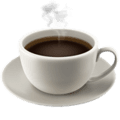
☕ is one of the oldest emoji on your phone. It has been there since Unicode 4.0 in 2003, seven years before iOS got an emoji keyboard. Officially it is U+2615 HOT BEVERAGE: a steaming mug, neutral, generic, technically not even coffee. In practice, it means whatever the country you are texting from says it means.
In the United States it usually means gossip. In Sweden it means fika. In Italy it means espresso, fast, standing up, and never a cappuccino past breakfast. In the UK it means tea, because the British still cannot quite admit that a cup-shaped emoji could refer to coffee. In Japan it often means a can. In Brazil it means a tiny scalding sugar bomb that arrives the moment you sit down. In Australia, it means a flat white, and a small amount of national pride that Starbucks lost hundreds of millions of dollars learning about.
This is a tongue-in-cheek tour of one emoji and seven different cultural readings.
Copy coffee-adjacent emojis
Coffee chat. The lowest-pressure 1:1 in corporate America.
If your coworker drops ☕ unprompted, brace for a 'have you heard about…'
Where ☕ came from
The hot beverage emoji predates emoji as we know it. The codepoint U+2615 was added in Unicode 4.0 in 2003 as a black-and-white symbol, originally intended for hot-drink signage on highway exits. It got an emoji presentation in Unicode 6.0 in October 2010, when the Consortium absorbed the proprietary emoji sets that SoftBank, NTT DoCoMo, and KDDI au had been shipping on Japanese phones since the 1990s. The Japanese carriers had a coffee glyph because canned coffee in Japan launched in 1965 and was already a vending-machine staple by the time mobile phones started shipping pictograms.
The emoji has had a quiet career upgrade ever since. As of 2023 it was the most-used food and drink emoji on Twitter, appearing in 241 of every 100,000 tweets. The 🎂 birthday cake came in second at 93. The 🍻 clinking beer mugs got a distant 73. ☕ does not just lead the food-and-drink leaderboard. It laps it.
United States: a frog, a mug, a meme
In the United States, ☕ is doing two jobs at once. It still means literal coffee, especially on Instagram stories shot between 6am and 10am. But it also means gossip, drama, or someone-else's-business that you are about to share.
The slang side of ☕ is older than the meme. The word "tea" for gossip comes from Black drag and ballroom culture, where "T" was short for "truth". The drag legend Lady Chablis used "my T" to mean "my business" as far back as the early 1990s. The phrase migrated through Tumblr and Twitter in the early 2010s, and then it got its face.
In April 2014, Lipton aired a Kermit-the-Frog ad campaign during the Academy Awards encouraging people to "be more tea". By June 17, 2014, the first Kermit-sipping image macro with the caption "that's none of my business" appeared on Instagram. The @thatsnoneofmybusinesstho account opened on June 20 and hit 130,000 followers in four days. The hashtag #NoneOfMyBusiness was used 19,000 times in those same four days. From then on, 🐸☕ became a complete sentence.
Today, in an American group chat, ☕ alone after a story about someone else means "tell me more". ☕ alongside 👀 means you are watching something unfold without commenting. ☕ in a Slack DM at 9am means coffee. ☕ in a Slack DM after "guess what I just heard" means the other thing.
Sweden: fika is bigger than you think
In Sweden, ☕ usually means fika: a paid coffee-and-pastry break that is so structurally important to the Swedish workday that some employment contracts include it explicitly. The word fika is the inverted version of the 19th-century slang word kaffi (so kaffi → fika is hipster pig latin from 1850). Two breaks a day are standard: one mid-morning, one around 3pm. Coffee and tea are universally free at every Swedish workplace. The pastry of choice is the kanelbulle, a cardamom-spiced cinnamon bun.
Sweden ranks sixth in the world in per-capita coffee consumption at about 8.2 kg per person per year, which is roughly three cups a day. Finland is first at 12 kg. The Nordics together drink more coffee than anyone else. ☕ in a Swedish DM is, with very few exceptions, sincere. The gossip meaning never properly migrated north.
The cultural anchoring is lagom, a word that roughly translates to "not too little, not too much, just right". Fika is supposed to slow you down. ☕ + 🥐 in Swedish is not a flirt. It is an enforced rest period.
Italy: the cappuccino crime
In Italy, ☕ means espresso. Not coffee in general, espresso specifically. Standing at the bar. About a euro. About 60 seconds. The bartender has already moved on to the next person. You can order a macchiato, lungo, ristretto, corretto, or marocchino, but unless you specify, "un caffè" is an espresso.
And then there is the cappuccino rule. You should not order one after 11 a.m. The reason is digestive: cappuccino is warm milk plus espresso, and Italians treat warm milk as too heavy for after-meal drinking. The drink is named after the hooded brown robes of the Capuchin monks; the modern version stabilized after the espresso machine became common in the late 1800s, and the word "cappuccino" only entered common Italian usage in the late 1940s.
The 11am rule is, in practice, a strong cultural preference rather than a fineable offense. Younger Italians flout it freely. Tourists who break it get gentle eye-rolls. A traditional bar in Rome will still serve the cappuccino, but the bartender will know exactly what nationality you are.
☕ in Italian DMs reads strictly literal. The English-language gossip meaning is essentially unknown. If an Italian friend sends you ☕, they want espresso, fast, with you, soon, and probably tomorrow morning.
Japan: a can of BOSS, every day forever
In Japan, ☕ is often a can. Specifically, it is often BOSS, a Suntory brand launched in 1992 with a cigar-smoking dad on the label and the marketing position of being "coffee for the hardworking people on the street". From 2006 to 2024, BOSS ran a 17-year-long ad campaign starring Tommy Lee Jones as an alien anthropologist studying Japanese office life. It is one of the longest-running celebrity endorsement runs in advertising history.
Canned coffee itself was invented in Japan in 1965 by Miura Yoshitake, a coffee shop owner in Hamada who had watched the local fish-canneries and reasoned the same trick would work on coffee. UCC commercialized the format in 1969. Pokka introduced the first hot-and-cold vending machine in 1973. Today there is roughly one vending machine for every 23 people in Japan. The average Japanese person drinks 90 to 100 cans of coffee per year.
☕ in a Japanese DM has the same dual meaning as any drink emoji, but the underlying physical referent is more often metallic than ceramic. Younger urban Japanese coffee culture is now genuinely third-wave (Blue Bottle has Tokyo locations, Onibus is internationally known) but the canned coffee is still the daily default.
United Kingdom: the kettle code
In the UK, ☕ is contested. It might be coffee. It is more probably tea. The British drink roughly 100 million cups of tea a day, and the cup-and-saucer in your phone keyboard is doing double duty for both drinks at once.
The British workplace runs on what tea-culture researchers call the kettle code: a tea-round protocol where each colleague takes turns making tea for everyone, and freeloaders who never reciprocate get social sanctions ranging from passive-aggressive comments ("must be nice having tea made for you") to exclusion from future rounds. "Putting the kettle on?" is the actual question. "Cuppa?" is the shortened version. Either, sent in a Slack message, means tea is being offered to the room.
☕ alone, sent privately, can mean either coffee or tea depending on the sender's background. Older Brits skew tea. Younger urban Brits skew coffee. The northern English word "brew" almost always means tea. The southern English word "coffee" almost always means coffee. The emoji ☕ is silent on which.
The British use ☕ for the same gossip meaning as Americans, but with extra apology embedded. "Cup of tea?" in a private chat after a story can mean "sit down, I have news", or it can mean someone has actually put the kettle on. Disambiguation usually requires a follow-up message.
Brazil: cafezinho as punctuation
In Brazil, ☕ means cafezinho: a small, sweet, scalding coffee that is offered when you arrive somewhere, when you leave, when a conversation gets serious, when a meeting ends, when you are introduced to a stranger, and somewhere between three and infinite other moments per day. The translation is "little coffee", but the cultural weight is closer to "social punctuation mark".
Cafezinho is brewed with sugar added during the brewing, not stirred in afterwards, and traditionally pulled through a reusable cloth filter called a coador (a cotton sock-shaped filter hung over a container). Most homes own one. Most workplaces have a permanent thermos of cafezinho available all day. Many gas stations and pharmacies still serve it free.
The hospitality logic is that nobody, regardless of class, leaves a Brazilian household without being offered one. Refusing a cafezinho from a Brazilian grandparent is a minor diplomatic incident. ☕ in a Brazilian DM is unambiguous: the sender is offering a cafezinho or asking you to pause and talk to them over one.
Australia: the flat white was a hill they died on
In Australia, ☕ is a flat white. The flat white is, depending on whose press release you believe, either a Sydney invention from 1985 (cafe owner Alan Preston, Moors Espresso Bar in Chinatown) or a Wellington, New Zealand invention from the 1990s, depending on which side of the Tasman Sea you ask. Both countries have spent forty years arguing.
Australian coffee culture is so locally dominant that Starbucks essentially failed in Australia, racking up hundreds of millions of dollars in losses before mostly retreating to airports and tourist areas. The post-WWII Greek and Italian immigrant communities seeded a Melbourne and Sydney espresso scene that still produces, by international consensus, some of the best baristas in the world.
When Starbucks introduced the flat white to North America in January 2015, its press release credited Australia, and New Zealanders got predictably annoyed. The flat white is now a global menu item that nobody outside Australasia really understands and nobody inside Australasia really agrees on.
☕ in an Australian DM is overwhelmingly literal, with a side of national pride. Brunch is the dominant Saturday social ritual, ☕ + 🥑 + 🍳 is the standard breakfast macro, and nobody is going to read your ☕ as gossip.
Search data: cappuccino ate the world
Google Trends gives a useful global view of which coffee word people are actually searching for. Here are five years of quarterly search interest for "cappuccino", "fika", "spill the tea", and the literal "coffee emoji".
Cappuccino dominates by an order of magnitude, and spikes in northern-hemisphere summers as tourists land in Italy and try to order one at 2pm. Fika sits steady in the 11-18 range, rising slightly each year as Scandinavian-coded wellness content keeps growing. "Spill the tea" sits at 2-3, which sounds low but reflects that the phrase has moved into ambient internet vocabulary; people stopped Googling it because everyone already knows. "Coffee emoji" itself is essentially a flat line, which is how most emoji searches behave: you do not Google an emoji you can already see.
Source: Google Trends, quarterly max
The takeaway: the gossip meaning of ☕ is now so mainstream it does not need to be explained. Cappuccino is a tourist search. Fika is a niche, growing one. The emoji itself works because it floats above all of these, ambiguous on purpose, ready to be read as whatever the recipient's culture says it should be.
Use the right ☕ in the right country
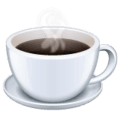
Across all the rendering engines, ☕ is one of the most stable emojis on every platform. Apple, Google, Samsung, Microsoft, WhatsApp, and Telegram all draw a brown drink in a white-or-tan mug with steam. There is essentially no glyph dispute. The dispute is what the sender meant.












What not to send
Cross-cultural ☕ has texting hazards. Here is what to keep your fingers off when DMing across borders.
The Kermit-sipping-tea meaning is largely an English-language internet phenomenon. Italians, Japanese, and Brazilians will read 🐸☕ as 'frog drinks coffee' and wonder why.
Reads as a coffee invite, which is fine, except the unspoken assumption is espresso. Send ☕ at 3pm in Italy and you are inviting an espresso, not a leisurely afternoon hangout.
Reads as gossip in English-speaking offices. In Sweden it just looks like you want to fika and you are watching for the kanelbulle to arrive.
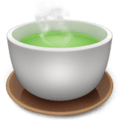
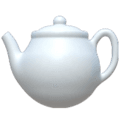
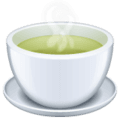
🍵 is a teacup-without-handle, specifically Japanese matcha or green tea. Use ☕ for English/Indian-style tea, 🍵 for matcha, 🫖 for the teapot itself. The British will not necessarily decode 🍵 as 'a cuppa'.
Australian coffee culture is morning-coded. Coffee dates happen on weekends before noon. ☕ at 8pm reads as 'I want to talk about something serious', not 'I want to flirt'.
What this tells us about ☕
☕ is one of the only emoji on your phone that does this much cross-cultural code-switching. Most emojis have one stable meaning across borders: 🔥 means hot or excellent everywhere; 💀 means dead or laughing-to-death almost everywhere; 🙏 means prayer or thank-you in most places. ☕ is different because the literal underneath it (a hot beverage) is itself wildly different across cultures. A cappuccino, a fika kanelbulle pairing, a cafezinho, and a cup of breakfast English Breakfast tea are all the same codepoint. They are not the same thing.
The Unicode Consortium did not anticipate this when U+2615 was added in 2003 as a generic hot-drink road sign. The whole point of the codepoint was to be neutral signage, like a gas pump or a wheelchair. Instead it absorbed the entire global ritual of sitting down with a hot drink and someone you want to talk to, and quietly became gossip shorthand on top.
The emoji works because it stays generic. If Unicode had ever shipped a dedicated 🇮🇹 espresso, a 🇸🇪 fika, a 🇧🇷 cafezinho, and a 🇬🇧 cuppa, every conversation would now require a flag check before sending. Instead, ☕ keeps doing what it has done since 2010: arriving ambiguous, getting decoded by the receiver, and meaning whichever ritual the local kitchen runs on.
Send it. The person on the other end will work it out.
- Hot Beverage emoji on Emojipedia (emojipedia.org)
- Kermit Sipping Tea / But That's None of My Business — Know Your Meme (knowyourmeme.com)
- Let's Talk 'Tea' — Merriam-Webster (merriam-webster.com)
- The Bizarre History Behind Fika, Sweden's Mandatory Coffee Break — VinePair (vinepair.com)
- Coffee in Sweden — Wikipedia (wikipedia.org)
- Why You Shouldn't Order a Cappuccino in Italy After 11am — Italy Explained (italyexplained.com)
- Why You Should Never Drink Cappuccino After 11 A.M. — HuffPost (huffpost.com)
- Boss Coffee: The History Behind the Popular Can — Unseen Japan (unseen-japan.com)
- Canned Coffee in Japan: From Innovation to Cultural Icon — Kokoro Care (kokorocares.com)
- Tea in the United Kingdom — Wikipedia (wikipedia.org)
- Social Psychology of Tea: Reciprocity, Bonding, and the Kettle Code — TeaTrade (teatrade.co.uk)
- Brazilian Coffee Culture: Why Cafezinho Matters — Blurred Culture (blurredculture.com)
- Who Invented the Flat White? — Australian Geographic (australiangeographic.com.au)
- Starbucks failed expansion plan in Australia explained — CNBC (cnbc.com)
- What Is a Flat White? — TIME (time.com)
- Twitter most popular food and drink emojis 2023 — Statista (statista.com)
- Coffee Consumption by Country 2025 — Cafely (cafely.com)
- Tea Fit for a Queen — Anthropology News (anthropology-news.org)
- Hot Beverage Emoji meaning — Dictionary.com (dictionary.com)
- Google Trends data backing this post (trends.google.com)
