
TikTok Emojis: The Hidden Ones, and What They Actually Mean
Open any TikTok comment section and you are reading two languages at once. Most of it looks like ordinary emoji, the same 💀 and 😭 your phone has always had. But scattered through it are words in square brackets that turn into little faces nobody else on the internet can see, and the ordinary emoji are not saying what the dictionary thinks they are saying.
TikTok is unusual in running both systems in the same box. It shipped a private emoji set that exists nowhere else, and it became the place where the meaning of the public set gets decided for everyone. This is what both halves are doing.
Copy the emoji doing the most work in TikTok comments
Two vocabularies, one comment box
The private vocabulary is a fixed set of 46 images. You reach them by typing a word in square brackets, and TikTok swaps in artwork when you post. The public vocabulary is the ordinary Unicode set, the same characters everyone has, but read through conventions that TikTok comment culture built and then exported.
The distinction matters because the two behave completely differently when they leave the app. Paste a bracket code into a text message and it stays as text. Paste 💀 anywhere and it keeps its shape, though whether the person reading it understands laughter or death depends entirely on how much time they spend online.
Try it on a real comment. The translator below reads both layers at once.
Translate a TikTok comment
Type a comment, or pick one below. Both vocabularies get decoded: the bracket codes that only exist inside TikTok, and the ordinary emoji that mean something different there.
Private layer, TikTok only
[pride]Dumpling with a kissy mouth and one raised eyebrow. Reads as a smirk, not pride.
Public layer, different meaning here
- reads as dead from laughing, not death or danger · used 2x, repetition raises the intensity
Bracket codes render as TikTok’s own artwork once posted inside the app. Everywhere else they stay as text.
The layer only TikTok can see
There are exactly 46 of these, and TikTok has never published a list. That absence is most of the reason people go looking: the feature is undocumented by the company that built it, so every reference to it is reverse-engineered by users. We keep the full searchable set on the TikTok emoji codes guide, so this post will not reprint the table.
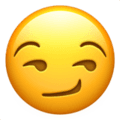
What is worth saying here is that the naming is genuinely bad, and deliberately or not, that is part of the appeal. 3 of the codes are named after something other than the picture they draw. The best known is [pride], which produces a smirk 😏. Nobody guesses that. You either know it or you do not, which is exactly the property a group marker needs.
The art style is its own signal too. Roughly half the set are round faces, and the rest are dumpling-shaped characters that look nothing like the Apple or Google emoji sitting next to them in the same sentence. A comment mixing both reads as visibly native to the platform.
Why a platform builds its own emoji
The habit arrives from Douyin, the app ByteDanceruns in China, where in-app sticker sets have been standard for years. Shipping images rather than characters solves a real problem: an image renders identically for everyone, while a Unicode character depends on whether the reader’s device has been updated to know it exists.
There is an ownership dimension as well. Anyone can use 😂 because it belongs to the Unicode Consortium and every vendor draws its own version. A dumpling in sunglasses that only exists in one app is property, and Chinese tech companies have competed to trademark their own emoji designs.
TikTok is not alone in this. Twitch built an entire culture on proprietary emotes, where images like Kappa and PogChamp function as micro-memes that mean nothing outside the platform. Discord and Slack let communities upload their own. The pattern is consistent: once a platform is large enough, a private symbol set becomes a way to make belonging legible.
Unicode emoji go through a slow public process. Anyone can submit, but only a limited number are standardised each year, proposals are judged on evidence of expected usage, and a rejected one cannot be resubmitted for four years. A platform that wants a new face next quarter simply draws one. Speed is the whole advantage.
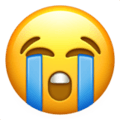
The same character looks different on every platform even within the public set, which is its own source of confusion. Here is how a few of the emoji doing heavy lifting in TikTok comments render across vendors:























The public layer TikTok rewrote
The private set is the novelty. The public set is where TikTok actually changed how people write, because the meanings that settled in its comment sections did not stay there.
The clearest case is laughter. 😂 was, for years, the most used emoji on earth. Then it became the thing your parents sent, and Dictionary.com documents the flip: 💀 now carries "I’m dying with laughter", while 😭 was pulled across from grief to mean something is too funny or too sweet to handle. The mechanism is semantic bleaching, which the skull emoji page covers in detail, where a symbol used for everything gradually means nothing in particular.
The reversals go further than laughter. 🙂 reads as a flat, faintly hostile non-smile rather than politeness. 👍 lands as curt. Both are cases where the sincere reading became the sarcastic one, which is why a perfectly friendly message from an older colleague can feel like a slammed door.
None of this is TikTok’s invention alone, but the app accelerated it. For the ranking picture across every platform, including which emoji actually top usage tables, our most popular emojis of 2026 breakdown has the numbers, and this post will not duplicate them.
What the codes actually signal
Here is the part that gets missed. People do not use [pride] because they need a smirk. 😏 already exists, sits on every keyboard, and takes one tap instead of seven.
They use it because typing it proves something. The codes are undocumented, awkwardly named, and only work in one place, so using one correctly demonstrates you have spent enough time on TikTok to have learned a thing that is not written down. It is a fluency badge, and fluency badges only work when they are slightly hard.
This also explains why the codes never spread. A symbol whose value is that outsiders cannot read it has no reason to travel, and technically it cannot: the images live inside the app.
There is a practical footnote worth knowing if you are a creator rather than a commenter. Comment volume is one of the engagement signals TikTok weighs, and a busy comment section reads as a video worth showing to more people. TikTok does not publish how it scores an individual comment, so treat any confident claim about emoji-only replies being penalised as a guess. What is safe to say is that a wall of 🔥 and 💀 is decoration, and a reply someone actually answers is a conversation.
When emoji become a workaround
Emoji on TikTok also do a job that has nothing to do with tone. They get used to dodge moderation, a practice researchers call algospeak.
The most thorough account is a 2023 study in Social Media + Societyby Ella Steen, Kathryn Yurechko and Daniel Klug, which found users adopting substitutions because they read TikTok’s automated moderation as non-contextual, random, inaccurate and biased. Their conclusion is that people were mostly protecting benign content, on sex education, gender identity and activism, from being wrongly suppressed.
Emoji are well suited to this because image-based symbols are harder for text filters to catch. Wikipedia’s algospeak entry records 🌽 standing in for a word that rhymes with it, and 🍉 used as a pro-Palestinian symbol in place of a flag. Merriam-Webster now has an entry for the term, which is a reasonable marker of how mainstream the practice became.
The irony is neat. TikTok built a private emoji layer for expression, and users built a second private layer on top of the public one, this time to stay out of the filter’s way.
Why everyone started searching
Something measurable happened in the second half of 2024. Worldwide searches for "tiktok emojis" went from 23 to 88 on Google’s relative scale in two quarters, and stayed elevated for a year afterwards.
The obvious worry with a chart like that is that it reflects a seasonal pattern in how people search for emoji generally, so it is worth checking against other platforms. It does not. Instagram sits between 30 and 34 for the entire five years. Snapchat barely moves off 11. Only TikTok spikes, which makes this a story about that app rather than about emoji searching in general.
The timing sits alongside a period of intense attention on the app in the United States, where a law forcing a sale or shutdown led to a brief shutdown in January 2025 and a wave of users migrating to other apps. That said, the rise starts in the third quarter of 2024, before the shutdown, so the ban is context rather than cause. What the curve most likely shows is a large influx of people arriving on the platform, hitting a comment section they could not read, and going to a search engine about it.
Which is the honest summary of the whole topic. TikTok comments are hard to read on purpose, in both directions: a private set outsiders cannot see, and a public set whose meanings drifted while nobody sent out a memo. If you came here because a comment did not make sense, that was the design working.
- You Can (Not) Say What You Want: Using Algospeak to Contest and Evade Algorithmic Content Moderation on TikTok (journals.sagepub.com)
- How Gen Z Uses Emoji: A Guide For Millennials (dictionary.com)
- Algospeak (en.wikipedia.org)
- Algospeak slang entry (merriam-webster.com)
- What is RedNote? TikTok ban drives Americans to Chinese app (npr.org)
- Chinese tech giants race to secure trademark for their own emoji (scmp.com)
- Unicode emoji submission FAQ (unicode.org)
- Twitch introduces animated emotes (techcrunch.com)
- What role does engagement play in TikTok SEO? (team5pm.com)
- Douyin (en.wikipedia.org)
- ByteDance (en.wikipedia.org)
- Google Trends (trends.google.com)
