
Thumbs Up Emoji
U+1F44D:+1:Skin tonesAbout Thumbs Up 👍️
Thumbs Up () is part of the People & Body group in Unicode. Added in Unicode E0.6. Type on GitHub and Slack to use it. On Discord it's . Click copy above to grab it, paste it anywhere.
Works in iMessage, WhatsApp, Discord, Slack, Instagram, Twitter, Gmail, and every app that supports Unicode. Pick a skin tone above to customize it.
Often associated with +1, good, hand, and 4 more keywords.
Meaning varies across cultures, see cultural notes below.
Scroll down for the full story: meaning, trends, combos, and more.
How it looks
What does it mean?
Approval. Agreement. "Got it." The thumbs up is the most straightforward emoji in existence, and somehow also one of the most controversial. Older generations use it as a digital nod, a quick way to say "acknowledged" without typing a full response. Younger users increasingly read it as passive-aggressive, dismissive, or the text equivalent of being told "K." A viral Reddit thread in 2022 called it "hostile," which got picked up by TODAY, BBC, and CNN. It's also the only emoji that's been ruled legally binding as a contract signature by a Canadian court, where a farmer's 👍 reply to a grain contract photo cost him $82,200. The gesture itself predates digital communication by centuries, possibly millennia, with contested roots in Roman gladiatorial culture. In Iran, Iraq, and Afghanistan, the same gesture is equivalent to the middle finger.
According to Emojipedia's workplace research, 👍 is used by 54% of American workers in professional communication, making it the single most popular workplace emoji. On Slack, it accounts for 30% of all emoji reactions. Outside of work, it's used to confirm plans, acknowledge messages, and end conversations when you don't have anything else to add.
Approval, agreement, or acknowledgment. It's the digital version of a nod. "Got it," "sounds good," "OK." The simplest emoji with the widest interpretation gap between generations.
Because it's the minimum viable response. When someone sends you a long message and you reply with just 👍, it can feel like you didn't actually engage with what they said. One Reddit user compared it to someone looking you in the eye and saying nothing but giving a thumbs up. The emoji is fine; it's the context that makes it feel cold.
Sentiment Score: 👍 vs Other Reaction Emojis
Thumbs, four directions
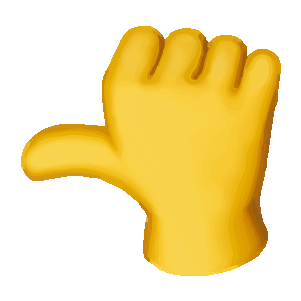 Left (2026)
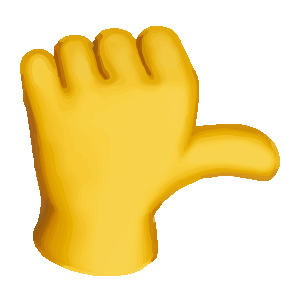 Right (2026)
What it means from...
Not great. A 👍 from someone you're interested in is usually the conversation killer. It means they registered your message but aren't invested enough to say more. If you're getting 👍 instead of actual words, the vibe is flat.
Normal. In established relationships, 👍 is just efficient communication. "Pick up milk?" "👍" There's nothing to decode. The alarm bells ring when it replaces actual conversation entirely.
Fine for logistics. "Meet at 7?" "👍" But if you share something emotional and get a lone thumbs up back, it can feel dismissive. Context is everything with this one.
The safe default. 👍 is the most-used emoji in professional settings for a reason. It says "received, understood, no further action needed" without being too casual. Some Gen Z workers find it passive-aggressive in certain tones, but most workplaces treat it as standard.
The passive-aggressive spectrum
- 😊"No worries! 😊": Warm, reassuring, clearly fine with it
- 🫶"All good 🫶": Affectionate, no hard feelings
- 👍"Ok 👍": This is where it splits. Over-30s read it as neutral. Under-25s read it as annoyed.
- 👍"👍": Just the emoji alone. To millennials: fine. To Gen Z: ice cold.
- "K": The only response colder than a lone 👍. This is the floor.
Flirty or friendly?
👍 is never flirty. If you received a thumbs up from someone you're into, don't try to read romance into it. It's the least romantic emoji. The only signal it sends in a dating context is "I acknowledge your existence."
- •👍 after you suggest a date? They agreed, but the enthusiasm is... not there.
- •👍 as a reaction to your selfie? Oof. They could have sent 🔥 or 😍 but they chose 👍.
- •👍 after a long message you poured your heart into? They might just be a bad texter. Or they're not that into it.
Usually just "OK" or "got it." Guys tend to use 👍 as a low-effort acknowledgment. If you're dating someone and they respond to your messages with just 👍 regularly, they're probably not very invested in the conversation. It's not mean, it's just minimal.
Context matters a lot. If she normally sends longer messages with emojis and suddenly drops to just 👍, she might be annoyed or done talking. If 👍 is her normal style, don't overthink it. Some people just use it efficiently.
Emoji combos
Origin story
The thumbs up gesture is popularly associated with Roman gladiatorial combat, where crowds supposedly gave a thumbs up to spare a fighter's life. The reality is murkier. The Latin phrase "pollice verso" (turned thumb) appears in ancient texts, but historians don't agree on whether it meant up, down, or sideways. The myth was cemented by Jean-Léon Gérôme's 1872 painting "Pollice Verso" and later by Ridley Scott's Gladiator. The modern positive meaning likely developed in the 20th century, particularly among English-speaking militaries. The emoji itself arrived in Unicode 6.0 in 2010.
Approved in Unicode 6.0 (2010) as THUMBS UP SIGN. Added to Emoji 1.0 in 2015. Skin tone variants added in Emoji 2.0 (2015) via the Fitzpatrick scale.
Design history
- 2010Unicode 6.0 adds U+1F44D THUMBS UP SIGN↗
- 2015Emoji 1.0 formalizes it. Skin tone variants added via Fitzpatrick scale in Emoji 2.0
- 2016Facebook rolls out Reactions globally, with the thumbs up 👍 as the default Like
- 2022Gen Z passive-aggressive debate goes viral on Reddit, picked up by TODAY, BBC, CNN
- 2023Saskatchewan court rules a 👍 constitutes a legally binding contract signature↗
- 2024Saskatchewan Court of Appeal upholds the ruling↗
The Canadian 👍 Contract Saga, in One Chart
Around the world
This is one of the few emoji where the cultural gap is actually dangerous, not just interesting. In the US, UK, and most of Europe, 👍 is positive. In Iran, Iraq, and Afghanistan, the thumbs up gesture is equivalent to the middle finger. In Greece, it's similarly offensive. Australia also historically considered it rude, though globalization has softened that. If you're communicating across cultures, especially in professional settings, this matters.
Yes, really. In Iran, Iraq, and Afghanistan, the thumbs up gesture is equivalent to the middle finger. Greece and parts of Australia also consider it offensive. This isn't a minor cultural quirk. If you're in a cross-cultural group chat, be aware.
Probably not. The Latin "pollice verso" (turned thumb) appears in ancient texts, but historians disagree on what direction the thumb pointed. The popular myth comes from an 1872 painting by Jean-Léon Gérôme, not from historical evidence. Classical research suggests a tucked thumb meant mercy, not a raised one.
👍 vs Other Confirmation Emojis: Dimensions of Meaning
Countries where 👍 is an insult
- 🇮🇷Iran: Equivalent to the middle finger. Same gesture, same intent. [Translate En](https://www.translateen.com/blog/viral-trends-slang/thumbs-up-offensive-countries/) documents routine diplomatic briefings about it.
- 🇮🇶Iraq: Same reading as Iran. U.S. troops in 2003 initially read local 👍 responses as approval; the opposite meaning was one of the early cultural-friction stories of the war.
- 🇦🇫Afghanistan: Obscene gesture. The Achter Saskatchewan ruling would be unprintable here.
- 🇬🇷Greece: "Up yours." Holds even among younger Greeks, though the emoji is less loaded than the physical gesture.
- 🇮🇹Sardinia: Same offense level as Greece. Mainland Italy uses 👍 normally; Sardinia stays the holdout.
- 🇷🇺Russia: Vulgar insult when used in-person among older generations. Younger Russians online use the emoji normally.
- 🇧🇩Bangladesh: Obscene, regionally dependent. In texts to older family members, avoid.
- 🇳🇬Nigeria: Considered rude, particularly in northern regions. [Lingoda](https://www.lingoda.com/blog/en/15-insulting-gestures-in-different-cultures/) notes it's safer to just type "noted."
- 🇹🇭Thailand: Childish retaliatory gesture, roughly equivalent to sticking out a tongue. Won't offend adults, but reads as immature.
- 🇦🇺Australia: Historically rude, now largely softened by globalization. Older Australians still read the raised thumb as dismissive.
- 🌍West Africa (broad): Interpreted as an obscene insult across Ghana, Côte d'Ivoire, Burkina Faso. The emoji inherits the physical gesture's reading.
👍 means yes in Saskatchewan. Not in British Columbia.
| Saskatchewan: 👍 = binding | British Columbia: 👍 ≠ binding | |
|---|---|---|
| Case | [Achter Land & Cattle v South West Terminal (2023)](https://www.washingtonpost.com/business/2023/07/07/thumbs-up-emoji-contract-canada/) | [Ross v Garvey, 2025 BCSC 705](https://www.blg.com/en/insights/2025/05/no-signature-no-sale-the-emoji-that-couldnt-seal-the-deal) |
| Context | Grain contract by text message | Real-estate sale by text message |
| Ruling | 👍 plus sender metadata satisfies Sale of Goods Act signature requirement. Farmer owes $82,200. | 👍 lacks 'formal inscription reflecting identity.' Not enforceable as a signature. |
| Appeal | [SK Court of Appeal upheld 2-1 (Nov 2024)](https://www.cbc.ca/news/canada/saskatchewan/court-of-appeal-thumbs-up-emoji-contract-1.7415247). [SCC declined leave (Aug 2025)](https://www.cbc.ca/news/canada/saskatoon/cp-supreme-court-rejects-emoji-1.7592988). | No appeal reported. BC rule stands. |
| Effect | Grain, agricultural, and B2B deals: thumb-up at your own risk. | Real-estate deals in BC: thumb-up doesn't close. |
Popularity ranking
Search interest
Who uses it?
How Workers Feel About 👍 at Work
Sender intent vs how each generation reads it
Where is it used?
Often confused with
OK hand. Similar "all good" energy, but 👌 has been co-opted by various online subcultures and can carry unintended connotations. 👍 is the safer workplace choice.
OK hand. Similar "all good" energy, but 👌 has been co-opted by various online subcultures and can carry unintended connotations. 👍 is the safer workplace choice.
Saluting face. Both signal acknowledgment, but 🫡 has more personality. It reads as "yes sir" with a wink. 👍 is flatter, more utilitarian.
Saluting face. Both signal acknowledgment, but 🫡 has more personality. It reads as "yes sir" with a wink. 👍 is flatter, more utilitarian.
Check mark. More definitive than 👍. ✅ means "done" or "confirmed." 👍 means "acknowledged" or "sounds good." The distinction matters in task management.
Check mark. More definitive than 👍. ✅ means "done" or "confirmed." 👍 means "acknowledged" or "sounds good." The distinction matters in task management.
Both mean "OK" but 👌 has picked up additional connotations online (it's been co-opted by some internet subcultures). 👍 is the safer, more universal option, especially at work. 👌 also implies precision ("perfect") while 👍 is broader approval.
The Acknowledgment Emoji Map
Do's and don'ts
- ✓Use it to confirm plans, acknowledge messages, or approve requests
- ✓Pair it with words if the message deserves more than a one-emoji reply
- ✓Use as a Slack/Teams reaction to signal "seen" without cluttering the thread
- ✓Consider it the standard professional emoji reaction
- ✗Reply to someone's emotional message with just 👍
- ✗Use it in countries where the gesture is offensive (Iran, Iraq, Greece, parts of Australia)
- ✗Send it to a crush as your primary form of communication
- ✗Assume everyone reads it the same way you do, the generational gap is real
It depends who you ask. Gen Z increasingly reads it that way, especially in personal texts. A 2022 Reddit thread called it "hostile," and the debate went mainstream. Older generations almost universally mean it as a simple "OK." The intent-vs-reception gap is the whole story here.
In Canada, yes. A 2023 Saskatchewan court case ruled that a farmer's 👍 response to a contract photo was a valid acceptance. He owed $82,200 for undelivered grain. The Court of Appeal upheld it in 2024.
It's the most used emoji in professional settings. 54% of American workers use it. On Slack it accounts for 30% of all reactions. Most people consider it fine. Some younger workers find it cold, but it's as close to universally accepted in the workplace as any emoji gets.
There's no universal answer. NPR reported that white users disproportionately stick with yellow because selecting the lightest skin tone feels like explicitly performing whiteness. People of color are more likely to use skin tones that match them. Default yellow is the safest choice if you're unsure.
Caption ideas
Aesthetic sets
Type it as text
Fun facts
- •👍 ranked #4 on Unicode's emoji frequency list in 2021, jumping from #10 in 2019. It's the most-used emoji in the People & Body category.
- •54% of American workers use 👍 in professional communication, according to Emojipedia's workplace survey.
- •Facebook's Like button, which uses the 👍 icon, was introduced in 2009 and processes billions of interactions daily. It's the most-clicked thumbs up in human history.
- •The skin tone debate is real: NPR reported that white users disproportionately stick with the default yellow 👍 rather than selecting a light skin tone, because explicitly displaying whiteness felt uncomfortable.
- •A YouGov/Atlassian survey of 10,000 workers found 65% use emojis to convey tone at work, but while 88% of Gen Z found emojis helpful, only 49% of Boomers agreed.
- •A Canadian court ruled in 2023 that a 👍 reply to a texted photo of a contract constituted a legally binding signature. Saskatchewan farmer Chris Achter owed $82,200 for flax he never delivered after responding to "Please confirm flax contract" with 👍. Saskatchewan's Court of Appeal upheld the ruling in 2024. In August 2025 the Supreme Court of Canada declined to hear the appeal, making the ruling final.
- •In May 2025, British Columbia's Supreme Court found the opposite: a 👍 in a real-estate text exchange did NOT bind the seller because it lacked 'a formal inscription reflecting identity.' Canada now has two provinces with directly opposing precedents on whether 👍 counts as a signature.
- •A June 2025 Microsoft Teams update lets users stack up to 20 emoji reactions on a single message. Before the change, picking 👍 or not was binary. Now you can hedge: 👍 + 🫡 + ❤️ if you want to add warmth, or 👍 alone if you want to stay cold on purpose.
- •Facebook's Like button was originally called the "Awesome button." Coded during a single all-night hackathon on July 17, 2007 by Justin Rosenstein, Andrew Bosworth, Rebekah Cox, and Tom Whitnah. Zuckerberg called it "the cursed project" and shelved it for nearly two years. It finally shipped on February 9, 2009 with the name "Like" instead.
- •The exact 👍 pixels everyone copies came from Aaron Sittig, Facebook's 9th employee and first designer. Sittig designed the final Like button; the original 16×16 icon was drawn by Soleio Cuervo. Slack, LinkedIn, Instagram, and Microsoft Teams all picked up visually related thumbs-up marks in the years that followed. Sittig's 2009 design is arguably the single most-copied icon of the social era.
- •On November 10, 2021, YouTube hid public dislike counts globally. The stated reason was reducing "dislike attack" harassment of creators. Likes stayed visible, so 👍 became YouTube's last public crowd signal. Critics argued this turned a two-way metric into one-way propaganda; TechCrunch noted the experiment had been piloted since March 2021 before the global rollout.
Common misinterpretations
- •The biggest one: younger users reading 👍 as dismissive or passive-aggressive when the sender meant it as a straightforward "OK." One Reddit user compared it to "your boss turning to look you in the eye and going '👍'" without saying a word.
- •In Iran and Iraq, sending 👍 is equivalent to flipping someone off. If you're in a cross-cultural chat, this isn't a minor miscommunication.
- •Using 👍 to respond to something that clearly requires empathy (bad news, emotional vulnerability, a long personal message) reads as cold regardless of your generation.
In pop culture
- •In Gladiator (2000), Emperor Commodus uses the thumbs gesture to decide gladiators' fates. The film popularized the idea that thumbs up = life and thumbs down = death, though historians say the actual Roman gesture (pollice verso) may have been the opposite. Jean-Léon Gérôme's 1872 painting "Pollice Verso" cemented the modern interpretation that the film built on.
- •The October 2022 Reddit thread where a Gen Z user called 👍 "hostile" and "passive-aggressive" went globally viral. CBS, Sky News Australia with Piers Morgan, and CTV's The Social all ran segments debating whether the thumbs up emoji was rude. It became a generational litmus test: boomers and Gen X were baffled, Gen Z was vindicated.
- •In 2023, a Canadian court ruled that a 👍 emoji constituted a legally binding acceptance of a contract. A farmer texted 👍 in response to a grain buyer's offer, and the court held him to the deal. The case was upheld on appeal, establishing legal precedent for emoji as contract law.
- •Facebook's Like button (2009-present) is the world's most recognizable 👍. The blue thumbs-up icon has been clicked trillions of times and became so synonymous with social media approval that "liking" something entered everyday vocabulary. Facebook Messenger even uses a large 👍 as the default quick-send button.
- •Terminator 2: Judgment Day (1991) ends with the T-800 (Arnold Schwarzenegger) giving a thumbs up as he's lowered into molten steel. It became one of the most iconic movie endings of the 1990s and one of the most parodied thumbs-up moments in cinema.
Trivia
For developers
- •. Skin tone variants use Fitzpatrick modifiers: 👍🏻 is through 👍🏿 .
- •On Slack's API, 👍 is the or reaction. It's the most common reaction in Slack's dataset. If you're building analytics, weight it or it'll dominate everything.
- •Facebook's API uses the reaction type, which maps to 👍. If you're building social integrations, this is the reaction you'll handle most.
Approved in Unicode 6.0 in 2010 as "Thumbs Up Sign" (U+1F44D). Formalized in Emoji 1.0 in 2015. Skin tone variants were added the same year in Emoji 2.0.
See the full Emoji Developer Tools guide for regex patterns, encoding helpers, and more.
How do you use 👍?
Select all that apply
- Thumbs Up Emoji (Emojipedia)
- Corporate Characters: Emojis In The Digital Workplace (Emojipedia Blog)
- Canadian court: thumbs-up constitutes electronic signature (DLA Piper)
- Thumbs up ruled contract acceptance (Washington Post)
- Court of Appeal upholds thumbs up decision (CBC News)
- What's So Wrong About Using the Thumbs-Up Emoji? (Psychology Today)
- Thumbs up: good or passive aggressive? (The Conversation)
- 14 Hand Gestures That Are Rude Around the World (Reader's Digest)
- Pollice verso (Wikipedia)
- Emoji skin tone colors and race (NPR)
- Emoji use at work (Slack)
- Unicode Emoji Frequency (Unicode Consortium)
- Emoji Sentiment Ranking v1.0 (Jožef Stefan Institute)
- No signature, no sale: the emoji that couldn't seal the deal (BLG) (BLG)
- Supreme Court declines Saskatchewan farmer's emoji case (CBC, Aug 2025) (CBC News)
- Lessons from the Saskatchewan Court of Appeal (Fillmore Riley) (Fillmore Riley)
- When does 👍 mean yes? (Lawson Lundell) (Lawson Lundell)
- Multiple emoji reactions in Teams (Office365ITPros) (office365itpros.com)
- Justin Rosenstein and the Like Button (Wikibooks)
- Inside story of how Facebook designed the Like button (Fast Company)
- Aaron Sittig leaves Facebook (Adweek)
- YouTube hides dislike count (YouTube Blog)
- YouTube removing dislike count globally (TechCrunch)
- 15 Insulting Gestures in Different Cultures (Lingoda)
- Countries where thumbs-up is offensive (Translate En)
- South West Terminal v Achter Land 2023 SKKB 116 (Pallett Valo)
Related Emojis
More People & Body
Share this emoji
2,000+ emojis deeply researched. One click to copy. No ads.
Open eeemoji →