
Thumbs Down Emoji
U+1F44E:-1:Skin tonesAbout Thumbs Down 👎️
Thumbs Down () is part of the People & Body group in Unicode. Added in Unicode E0.6. Type on GitHub and Slack to use it. On Discord it's . Click copy above to grab it, paste it anywhere.
Works in iMessage, WhatsApp, Discord, Slack, Instagram, Twitter, Gmail, and every app that supports Unicode. Pick a skin tone above to customize it.
Often associated with -1, bad, dislike, and 7 more keywords.
Meaning varies across cultures, see cultural notes below.
Scroll down for the full story: meaning, trends, combos, and more.
How it looks
What does it mean?
A fist with the thumb pointing downward. Disapproval, rejection, "no." It's the digital version of a Roman emperor condemning a gladiator, except that the Roman gesture we think we know is almost certainly wrong. Classical studies professor Anthony Corbeill demonstrated that in ancient Rome, a thumbs up likely meant "kill him" (the thumb representing an unsheathed sword) while a closed fist with the thumb tucked in meant "spare him" (a sheathed sword). A French painter misread the Latin in 1872, and 150 years later we're still using his version.
In modern texting, 👎 is blunt. It's the most direct way to say "no," "bad idea," or "I disagree" without typing a word. That directness makes it one of the most emotionally loaded emojis. People have petitioned Microsoft to remove the 👎 reaction from Teams, arguing it creates hostile work environments. Facebook famously refused to add a dislike button because Mark Zuckerberg believed the negativity would be toxic. YouTube hid its dislike count in 2021, sparking a Chrome extension with millions of users trying to bring it back. Three of the biggest platforms in the world have grappled with 👎, and none of them handled it the same way.
On social media, 👎 is rare compared to 👍. People prefer to ignore content they dislike rather than actively downvote it with an emoji. When 👎 does appear, it carries weight. A 👎 reply on Twitter/X is confrontational. A 👎 reaction on a Slack message from your manager is devastating. The asymmetry is real: 👍 is the most-used emoji on many platforms, but 👎 barely registers in frequency data because people avoid expressing disapproval this directly.
The workplace is where 👎 causes the most friction. On Microsoft Teams, users have filed formal requests to remove the thumbs down reaction, calling it "excessively negative and dismissive" and reporting that it leaves recipients "feeling attacked, discouraged and disrespected, especially if the reaction comes from a manager." One documented case involved an employee being harassed through repeated negative emoji reactions on their posts, creating what they described as a hostile work environment.
Gen Z's relationship with thumb emojis is complicated. They already labeled 👍 as "passive-aggressive" in a viral 2022 Reddit thread. If 👍 is passive-aggressive, 👎 is just aggressive. The Conversation described thumb emojis as existing in a space where "overuse of a positive tends to lead to insincerity, which becomes a negative." 👎 skips the ambiguity and goes straight to negative.
Disapproval, rejection, or "no." It's the most direct way to express disagreement without words. In casual contexts, it's a quick vote against something. In workplace settings, it can feel confrontational and has been the subject of formal complaints on platforms like Microsoft Teams.
The approval / disapproval emoji pair
Thumbs, four directions
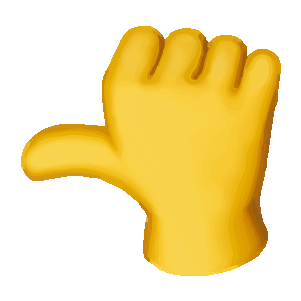 Left (2026)
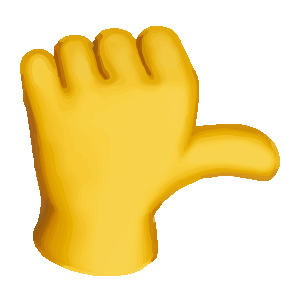 Right (2026)
What it means from...
From a crush, 👎 is not a gesture you want to receive. It's direct rejection. If they 👎 something you suggested (a restaurant, a movie), it's just a preference. If they 👎 your confession or a personal question, it's a clear "no" and you should respect it. There's no ambiguity here.
Between partners, 👎 is usually low-stakes: "Should we get Thai food?" "👎." It's a quick vote. But tone matters. A 👎 on something your partner is excited about can sting more than intended. If you mean "I'd rather not" instead of "that's terrible," a softer emoji like 😬 or 🤔 communicates better.
Among friends, 👎 is playful. Group chat polls ("Should we go out tonight? 👍 or 👎"), roasting someone's music taste, or rejecting a terrible meme are all fair game. The closer the friendship, the more 👎 functions as banter rather than actual rejection.
In family group chats, 👎 usually means "no thanks" to a plan. From a parent, it might feel more authoritative than intended. From a sibling, it's probably sarcasm.
This is the danger zone. A 👎 reaction on someone's work message can feel like a public rejection. People have formally complained about 👎 reactions in Microsoft Teams, describing them as hostile. If you disagree at work, type words. Don't 👎.
From a stranger, 👎 is confrontational. On social media, it reads as a deliberate callout. In comments sections, it's a heckle. Most platforms don't offer a 👎 reaction button precisely because of this dynamic.
Usually straightforward disapproval or disagreement. In casual texting, he's voting against something (a plan, a movie, an idea). On your content or selfie, it's rude. In dating contexts, it's a clear rejection. There's no hidden flirty meaning with 👎.
Same as from anyone: disapproval. If she 👎's a suggestion, she'd prefer something else. If she 👎's something you're excited about, she's being direct, which may feel blunt. The emoji doesn't change meaning based on gender.
Emoji combos
Origin story
The story of the thumbs down gesture is a story about a painting getting history wrong and nobody caring.
In 1872, French academic painter Jean-Léon Gérôme) completed Pollice Verso, a dramatic scene of Roman gladiatorial combat. In the painting, the Vestal Virgins gesture with turned-down thumbs, commanding the death of a defeated gladiator. The painting hangs in the Phoenix Art Museum today. It's vivid, cinematic, and almost certainly wrong about what the gesture meant.
The Latin phrase "pollice verso" translates only to "with turned thumb." It doesn't specify which direction. Classical studies professor Anthony Corbeill analyzed the primary sources and concluded that the meanings were likely reversed: a thumbs up (an unsheathed sword) signaled death, while a closed fist with the thumb pressed against the fingers (a sheathed sword) signaled mercy. Gérôme misread "verso" as "turned downward" when it may have just meant "turned." His error became our reality.
The painting's influence didn't stop at gesture interpretation. When producer Walter Parkes laid a reproduction of Pollice Verso on Ridley Scott's desk, Scott said: "That image spoke to me of the Roman Empire in all its glory and wickedness. I knew right then and there I was hooked." He signed on to direct Gladiator (2000) without even knowing the story. The film won five Academy Awards and cemented the thumbs-down-means-death image for another generation.
The modern thumbs up/thumbs down binary got another boost from American pop culture. In 1982, Chicago film critics Gene Siskel and Roger Ebert) launched their syndicated TV show with the signature "thumbs up / thumbs down" review system. They trademarked "Two Thumbs Up" and made the gesture the universal shorthand for good/bad ratings. Every star-rating system, every like/dislike button, every swipe-right/swipe-left owes something to two guys from Chicago who wanted a simpler way to say whether a movie was worth seeing.
Approved in Unicode 6.0 (2010) as THUMBS DOWN SIGN. Added to Emoji 1.0 in 2015. Supports skin tone modifiers ( through ). One of the original emoji set, paired with 👍 (). The gesture's association with disapproval in Western culture was cemented by Siskel & Ebert's movie review show), which trademarked "Two Thumbs Up" and made thumb gestures the universal shorthand for approve/reject.
Design history
- 1872Jean-Léon Gérôme paints Pollice Verso, cementing the thumbs-down-means-death interpretation↗
- 1982Siskel & Ebert launch their TV show with the thumbs up / thumbs down review system↗
- 2000Ridley Scott's Gladiator (inspired by Gérôme's painting) wins 5 Academy Awards↗
- 2010Unicode 6.0 approves 👎 as U+1F44E THUMBS DOWN SIGN↗
- 2016Facebook launches Reactions (Love, Haha, Wow, Sad, Angry) instead of a dislike button↗
- 2021YouTube hides public dislike counts, sparking backlash and the Return YouTube Dislike extension↗
Around the world
In most Western countries, 👎 unambiguously means disapproval, rejection, or "bad." But the gesture's meaning isn't universal, and its cousin 👍 is where the real cultural landmines lie.
In Iran, the thumbs-up gesture is historically equivalent to the Western middle finger. A 2003 Slate article explained that during the Iraq invasion, American soldiers flashing thumbs up at Iraqi civilians were unknowingly making an obscene gesture. The meaning has shifted among younger Iranians exposed to Western social media, but the traditional reading persists among older generations. Thumbs down doesn't carry the same taboo, but the entire thumb gesture family is culturally loaded in the region.
In parts of West Africa, particularly Nigeria and Ghana, thumbs up can be considered rude in certain contexts. The negative connotation extends somewhat to thumbs down.
In East Asia, 👎 is understood through Western pop culture influence (movies, YouTube, social media) rather than local gesture tradition. It's recognized but doesn't carry the same visceral punch as it does in the West.
The biggest cultural divide is generational, not geographic. A survey of 2,000 people aged 16-29 found that a majority consider thumb emojis markers of being "officially old." If 👍 is passive-aggressive to Gen Z, 👎 is outright hostile.
Probably not. Classical studies professor Anthony Corbeill demonstrated that the gestures were likely reversed: thumbs up (unsheathed sword) meant kill, while a closed fist with thumb tucked in (sheathed sword) meant spare. The modern interpretation comes from Jean-Léon Gérôme's 1872 painting Pollice Verso, which misread the Latin. Ridley Scott's Gladiator (2000), inspired by that painting, cemented the error.
The thumb gesture family is culturally loaded in parts of the Middle East. In Iran and Iraq, thumbs up historically carries the same meaning as the Western middle finger. Thumbs down doesn't carry the same specific taboo, but the general association of thumb gestures with vulgarity means 👎 may land differently than expected in the region.
Popularity ranking
Often confused with
👍 is approval, acknowledgment, "yes." 👎 is disapproval, rejection, "no." They're a matched pair in Unicode (U+1F44D and U+1F44E, consecutive codepoints). But they're not equally weighted. People send 👍 casually and constantly. 👎 is reserved for moments of active disapproval. The asymmetry reflects how humans communicate: we affirm more easily than we reject.
👍 is approval, acknowledgment, "yes." 👎 is disapproval, rejection, "no." They're a matched pair in Unicode (U+1F44D and U+1F44E, consecutive codepoints). But they're not equally weighted. People send 👍 casually and constantly. 👎 is reserved for moments of active disapproval. The asymmetry reflects how humans communicate: we affirm more easily than we reject.
They're a matched pair (consecutive Unicode codepoints) but wildly asymmetric in usage. 👍 is among the top 5 most-used emojis globally, sent casually and constantly. 👎 barely registers in frequency data because people avoid active disapproval. Sending 👍 is effortless. Sending 👎 is a deliberate choice.
Do's and don'ts
- ✓Use it in casual group chats for quick polls: "Pizza or sushi? 👍 or 👎"
- ✓Use it for content reviews or movie ratings among friends
- ✓Use it to express playful disagreement with close friends
- ✓Pair it with an explanation when the context isn't obvious
- ✗Don't 👎 react to a coworker's message without explanation. Type your feedback instead
- ✗Avoid using it as a reply to someone's personal news or creative work
- ✗Don't use it in cultures where thumb gestures have different connotations (Iran, parts of West Africa)
- ✗Don't use it as a conversation-ender. It shuts down dialogue instead of opening it
Context-dependent. In a group chat poll ("Pizza or sushi?"), it's fine. As a reaction to someone's work message or creative output, it can feel like a public rejection. People have formally petitioned Microsoft to remove 👎 from Teams reactions, calling it 'excessively negative.' The emoji carries more emotional weight than a simple 'no' because it offers no explanation.
Proceed with extreme caution. Microsoft Teams users have formally complained about the 👎 reaction, describing it as hostile and dismissive. A 👎 from a manager on your message can feel devastating without any context for why. If you disagree at work, type your reasoning. Words are always safer than a thumbs down.
Caption ideas
Aesthetic sets
Type it as text
Fun facts
- •The *Pollice Verso* painting that invented our modern understanding of thumbs down hangs in the Phoenix Art Museum in Arizona. When Ridley Scott saw a reproduction of it, he signed on to direct *Gladiator* without even knowing what the movie's story would be. It won five Academy Awards.
- •Siskel & Ebert trademarked "Two Thumbs Up" for their movie review show. The phrase was held by both families after Gene Siskel's death in 1999. Their simple thumb gesture system became the template for every binary rating system that followed: stars, hearts, likes, swipes.
- •When YouTube hid its dislike count in November 2021, the Return YouTube Dislike Chrome extension launched within weeks. It uses archived data and user behavior to estimate counts, and has been installed by millions of users who want the thumbs down count back.
- •👍 and 👎 are consecutive Unicode codepoints: and . They were designed as a matched pair, but their usage is wildly asymmetric. 👍 is among the top 5 most-used emojis globally. 👎 barely registers in frequency data.
- •In 2003, during the Iraq invasion, Slate reported that American soldiers flashing thumbs up at Iraqi civilians were unknowingly making an obscene gesture. In Iran and parts of Iraq, the thumbs-up gesture historically carries the same meaning as the Western middle finger.
- •Gary Dunaier, a 54-year-old Mets fan from Queens, became 'Thumbs Down Guy' in September 2017 after giving Todd Frazier a thumbs down at Citi Field. His GIF has been viewed over 155 million times. The kicker: the Yankees adopted his derisive gesture as their own celebration. Dunaier: "I meant it as derision and they're taking it as a positive thing."
- •Mentions of emojis in federal discrimination lawsuits doubled from 2016 to 2017 (6 cases to 12). In one case (Murdoch v. Medjet, 2018), a court found that a plaintiff's own use of a smiley face emoji undermined her hostile work environment claim.
- •YouTube Rewind 2018 hit 20 million dislikes in under a week, making YouTube's own video the most-hated video on its own platform. Justin Bieber's 'Baby' held the record for 8 years. YouTube Rewind beat it in 8 days.
Common misinterpretations
- •The biggest misconception: 👎 in a work chat is a quick, efficient way to disagree. It's not. It reads as a public rejection without explanation. People have formally complained about it. If you disagree at work, use words.
- •Some people use 👎 playfully ("Should we watch this movie?" "👎") but the recipient may read it as a harsher rejection than intended. The emoji has no tone markers. A 😬 or 🤔 communicates "I'd rather not" more gently.
- •In Iran and parts of the Middle East, the entire thumb gesture family (up and down) carries different cultural weight. Sending 👎 to someone from these regions may land differently than you expect.
In pop culture
- •Jean-Léon Gérôme's *Pollice Verso* (1872)) is the painting that defined the modern meaning of thumbs down. It directly inspired Ridley Scott's Gladiator (2000), which won five Academy Awards and reinforced the gesture for a new generation.
- •Siskel & Ebert's) syndicated TV show (1986-2010) made "thumbs up / thumbs down" the universal rating shorthand. They trademarked the phrase. Every like/dislike button on the internet descends from two Chicago film critics.
- •YouTube's iconic thumbs down button, present since the platform's earliest days, became a cultural flashpoint when the company hid the public dislike count in November 2021. The backlash spawned browser extensions, petitions, and memes.
Trivia
For developers
- •Codepoint: . Consecutive with (👍). Both are in the Miscellaneous Symbols and Pictographs block.
- •Skin tone support: append through for light to dark variants (e.g., for medium skin tone).
- •Common shortcodes: (Slack), (GitHub), (Discord). Note the variation in naming conventions across platforms.
- •When building rating/voting UIs, consider that 👎 carries more emotional weight than a simple "dislike." Facebook's Reactions and YouTube's hidden dislike count both reflect this asymmetry. A neutral "disagree" button may perform better than a thumbs down icon.
On November 10, 2021, YouTube announced it would hide public dislike counts to protect creators from 'dislike attacks' (coordinated mass-disliking that disproportionately targets smaller creators). The button stayed, but the number became invisible. The backlash was massive, spawning the 'Return YouTube Dislike' Chrome extension and multiple petitions.
Mark Zuckerberg said at a 2014 town hall that a dislike button would spread toxicity on the platform. Instead of adding 👎, Facebook launched Reactions in 2016 (Love, Haha, Wow, Sad, Angry), giving users ways to express negative emotions without a direct 'dislike.' They briefly tested a 👎 in Messenger but never brought it to the main feed.
Approved in Unicode 6.0 in 2010, added to Emoji 1.0 in 2015. It's one of the original emoji set, paired with 👍 as consecutive codepoints (U+1F44D and U+1F44E). Skin tone modifiers were added later. The gesture it represents has been associated with disapproval in Western culture since at least the 19th century, though its ancient Roman origins are more complicated than people think.
See the full Emoji Developer Tools guide for regex patterns, encoding helpers, and more.
How do you use 👎?
Select all that apply
- Thumbs Down Emoji (emojipedia.org)
- Pollice verso (Wikipedia) (wikipedia.org)
- Pollice Verso painting (Wikipedia) (wikipedia.org)
- Looking at Gérôme's Pollice Verso (Getty Museum) (getty.edu)
- The Gladiator and the Thumb (U of Chicago) (uchicago.edu)
- The Painting That Inspired Gladiator (Artnet) (artnet.com)
- Thumbs Down to the Myth (Roman Empire Times) (romanempiretimes.com)
- YouTube removing dislike count (TechCrunch) (techcrunch.com)
- Why We'll Never Get a Facebook Dislike Button (E!) (eonline.com)
- Request to Remove Thumbs Down from Teams (Microsoft) (microsoft.com)
- Gen Z and passive-aggressive emojis (Bored Panda) (boredpanda.com)
- Emojis as confusing online language (The Conversation) (theconversation.com)
- Siskel & Ebert Two Thumbs Up Origin (Screen Rant) (screenrant.com)
- What thumbs up means in Iraq (Slate) (slate.com)
- YouTube dislike removal (Know Your Meme) (knowyourmeme.com)
- Return YouTube Dislike (returnyoutubedislike.com)
- Emoji Frequency (unicode.org)
Related Emojis
More People & Body
Share this emoji
2,000+ emojis deeply researched. One click to copy. No ads.
Open eeemoji →