
Pushin' P: How Gunna Hijacked a Parking Sign
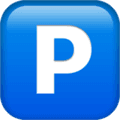
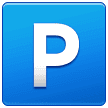
For thirteen years, 🅿️ was a parking sign. A blue square with a white capital P, designed for the kind of map screen where you need to know where to leave the car. Encoded in Unicode 5.2 in 2009, lifted from the Japanese carrier sets that birthed half of early emoji, given the official name Negative Squared Latin Capital Letter P. It was the kind of glyph nobody had a strong opinion about. It directed traffic.
On January 7, 2022, Gunna released a song called “pushin P” with Future and Young Thug. Within seven days the parking sign had been kidnapped. Brands were posting it. Kim Kardashian was captioning bikini photos with it. A multinational sneaker company was getting ratioed for using it. A year later, a rapper’s defense lawyer would stand in a Fulton County courtroom and tell a judge it actually stood for “pushing positivity.” The parking sign never got its job back.
Pushin P lexicon, tap to copy
The character minding its business
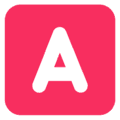
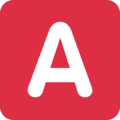
🅿️ lives at codepoint U+1F17F in the Enclosed Alphanumeric Supplement block, neighbors with 🅰️, 🅱️, and 🆎. It came up through the same path as most early symbol emoji: a Japanese carrier (Softbank) shipped it on phones in the 2000s, the Unicode Consortium absorbed the set into 5.2 in 2009, and Emoji 1.0 promoted it to a proper emoji in 2015. On Apple devices it appeared as part of the iOS 2.2 update for English-speaking markets.
For its entire pre-Gunna life, 🅿️ did one thing. It marked parking. It looked, deliberately, almost identical to the international parking sign used in most countries: white P on a blue background, sometimes with a dark border. That was the whole brief. Drivers know what it means. Map apps use it. Parking-app icons use it. The Pinterest logo, by an unrelated coincidence, also looks like a P inside a circle, which has caused at least one round of IP-lawyer paperwork.
Compare its workload to a hardworking emoji like 🔥 or 💀, which have sprouted half a dozen jobs each. 🅿️ had one job, and it did it quietly, alongside its sibling letters 🅰️, 🅱️, 🆎, 🆑, 🆒, 🆓, 🆔, 🆕, 🆖, 🆗, 🆘, 🆙, 🆚. Most of which are still doing exactly what they were drawn for.
Seven days that changed P
Per Know Your Meme’s timeline, the takeover happened almost on a calendar. Late December: Gunna posts a snippet, around 22,000 views. January 4 and 5: Gunna posts cryptic tweets asking followers to define the phrase, gets 27,400 likes on the first one, drops an Instagram Live explainer. January 7: the song releases. 22.5 million streams in week one and a debut at #7 on the Billboard Hot 100. January 12: the music video drops. January 14: Gunna goes on The Breakfast Club and tries, in the most flexible way possible, to define what P actually means.
By the third week of January, 🅿️ was on Kim Kardashian’s bikini photo caption as a substitute for the P in “Beach Party.” IHOP was tweeting “always pushing 🅿️ancakes,” a play that earned a quote-tweet co-sign from Gunna himself. The Memphis Grizzlies and the Toronto Raptors were doing it on their team accounts. The Washington Post would later describe it as a precipitous rise, which was generous.
What Gunna actually said it meant
The genius move was refusing to commit. Asked on The Breakfast Club, Gunna answered that “P stands for player, but P also means paper. P is keeping it real. P is genuine. P is loyalty.” Asked for examples, he gave a pair that ended up on every reaction post for the next month:
He also drew a distinction between kicking P and pushing P, which only really landed once you sat with it. Per Complex’s explainer: “If you’re in this mansion and it’s rented, you’re kicking P. If you buy it and you own it, you’re really pushing P.” The implication is that flexing on a borrowed platform is a category below flexing on something you actually paid for. Whether that distinction holds up morally is a different argument. As semantic engineering, it is genuinely useful.
The Houston rapper Sauce Walka surfaced quickly to insinuate that the P shorthand was Texas slang older than Gunna’s career. “The P, that’s Texas and Memphis, and a little bit of Chicago,” Walka said. “The biggest P of all Ps is the society of Ps is the player.” Whether or not Gunna invented the phrase is its own argument. What he definitely did invent was the moment when 🅿️ stopped meaning parking.
Try the decoder
The decoder below is a heuristic, not a Gunna ruling. Type any sentence and it will check for P signals (loyalty, owning the thing, holding the door) and anti-P signals (renting, snitching, arguing about money) and give you a confidence score. Final P-or-not-P rulings are still with Gunna.
Is this P?
type any sentenceLooks P, but you don’t own it. Borrowed P.
- +16respectful action (“respect”, “hold the door”, “tip”)
none detected
Heuristic only. Final P-or-not-P rulings are with Gunna.
The brand pile-on
The brand reactions sorted themselves into two tiers within forty-eight hours. IHOP went first and cleanest: replace the literal P in “pancakes” with the emoji, deliver the joke, let Gunna himself co-sign it. The pancake account became the example everyone else tried and failed to copy.
Nike came in late and corporate. The official Nike account tweeted “we had an internal meeting, and without getting into details, we’re pushin P all year”, and was promptly ratioed by users pointing out that a multinational with a known labor record was not the demographic Gunna had in mind. AXE deodorant followed. The Memphis Grizzlies, the Toronto Raptors, and a dozen other sports accounts followed. The pattern was the same: the cleaner the joke, the better it landed; the more committee-coded the post, the worse it ratioed.
That last combo is the one that survived the hardest. The negative form, ❌🅿️ or just “Not P” written out, outlasted the affirmative use almost everywhere except rap Twitter. Saying something is Not P became a way of calling out the exact thing the brand pile-on had revealed: a corporate account, a politician, a celebrity trying too hard. Gunna’s flexibility about the positive made the negative usable in a way the positive wasn’t.
The trial that redefined P
In May 2022, Gunna and Young Thug were arrested in a sweeping RICO indictment in Fulton County, Georgia that named twenty-eight defendants and used song lyrics as evidence. By the time Young Thug’s trial opened in November 2023, “pushin P” was already a cultural artifact. The prosecution wanted to use the song to argue that Thug was rapping about real activity. The defense had a problem.
Thug’s lawyer Brian Steel rose for opening statements and delivered the most cited lyric defense of the decade: pushin P, he told Judge Ural Glanville, stands for “pushing positivity.” In any circumstance you’re in, Steel said, if you think positively, you can make it through. Steel didn’t stop there. He also told the courtroom that “Thug” is an acronym for “Truly Humbled Under God.”
The internet did not let it go. Clips of the courtroom redefinition went viral within hours. Listeners on TikTok and X started captioning posts with “listening to Pushing Positivity by Young Truly Humbled Under God.” The moment became a meme inside a meme. It also, improbably, gave 🅿️ a third meaning. First parking, then playa, now whatever a defense lawyer needed it to mean in the moment.
The spike and the crater
The Google Trends data is its own short story. Before January 2022, search interest in “pushin p” was zero. Not low. Zero. The phrase did not exist in the search index. Then on the week of the song’s release, “what does p mean” jumped from a baseline of ten to one hundred (the highest possible value) and “pushing p meaning” came out of nowhere to seventy-eight. The chart is the cleanest viral spike in the eeemoji archive.
Then it cratered. By March 2022 “pushin p” was already down to twenty-five. By June, it was at eight. By the end of the year, four. The curve since then has been flat at one or two, which is what asymptotic decay looks like for a phrase the search index is no longer learning. The only blip is November 2023, when the trial pushed search interest back up to five for a single month before collapsing again.
Source: Google Trends
The cleanest story is “p emoji.” Pre-January 2022 it was a flat one. In the spike month it hit twenty. By April 2022 it was back to two and has stayed there. The emoji’s identity as a Gunna shibboleth is now baked in, but at trend-data scale, the cultural moment is invisible. The thirteen years of parking-sign use also barely register. 🅿️ is, in 2026, mostly a low-volume Maps icon again, with one heavily memed minute in 2022 that nobody outside rap Twitter searches for anymore.
P or Not P
Eight scenarios, three options each, all rulings backed by either Gunna’s own statements, the brand-pile-on coverage, or the trial transcript. See if you can keep up with the official P doctrine.
What 🅿️ means now
The honest answer is two things. In a navigation app, on a parking-meter receipt, in a Google Maps screenshot of a hotel listing, 🅿️ still means parking. That meaning never left. It just stopped being the only one.
In a tweet, a TikTok caption, a basketball post, or a brand post, 🅿️ means a particular flavor of approval that came from one specific cultural moment. It is the slang equivalent of saying “keep it real,” routed through a 2022 hip-hop record, and it carries a slight whiff of being a few years late if you’re the one using it. The phrase has cooled. The emoji hasn’t fully cooled. The negative form, ❌🅿️ or “not P” written out, turned out to be useful enough to outlast the trend.
Compare with 💯, which means the same thing in a more universal way. Or 🆒, which is the same kind of squared button as 🅿️ but came from a much older slang register and reads as vintage. Or 🚗, the car emoji that 🅿️ used to share a sentence with on every parking-related post. Each one charts a different path through emoji slang, and 🅿️ is now in a category of its own: the emoji that was permanently dual-cast by a single song.
How 🅿️ renders across platforms
The platform glyphs all roughly agree because the parking sign is an international standard. Apple, Google, Samsung, Microsoft, Twitter all draw a blue square with a white capital P. The variation is in the corner radius, the shade of blue, and the weight of the typography. Nobody has tried to redesign 🅿️ since the song. There is no temptation. The redesign would be a slang reference, and the slang reference is already ambient.










For more context, see the 🅿️ P button page for the full emoji entry, or the Emoji Overtime piece for which other Unicode glyphs have had similar second careers. 🅿️ is one of the few that picked up a new job this decade. Most emoji that get reassigned to slang were already hardworking. The parking sign was not. It was sitting in a quiet corner of the keyboard. Then a snippet dropped on December 29, and by week three of January 2022 it was on a pancake company’s Twitter, a reality-TV bikini caption, and the Memphis Grizzlies’ bench reacts. Pushing P, in the most literal sense the phrase ever earned.
- Pushin P: Wikipedia (wikipedia.org)
- Pushin' P: Know Your Meme timeline (knowyourmeme.com)
- Gunna defines pushin P on The Breakfast Club (blavity.com)
- What is P?: Complex explainer (complex.com)
- Gunna co-signs IHOP: Revolt (revolt.tv)
- Nike's cringeworthy pushin P tweet: The Source (thesource.com)
- Sauce Walka claims Texas origin: HotNewHipHop (hotnewhiphop.com)
- Young Thug RICO trial: pushing positivity defense: Stereogum (stereogum.com)
- Foxnews: courtroom 'pushing positivity' goes viral (foxnews.com)
- Pushin P meaning explainer: Capital XTRA (capitalxtra.com)
- Kim K Beach 🅿️arty: Elite Daily (elitedaily.com)
- U+1F17F codepoint reference (codepoints.net)
- P Button on Emojipedia (emojipedia.org)
- Pushin P lyrics: Billboard (billboard.com)
- Gunna explains pushin P on TikTok: Dexerto (dexerto.com)
